
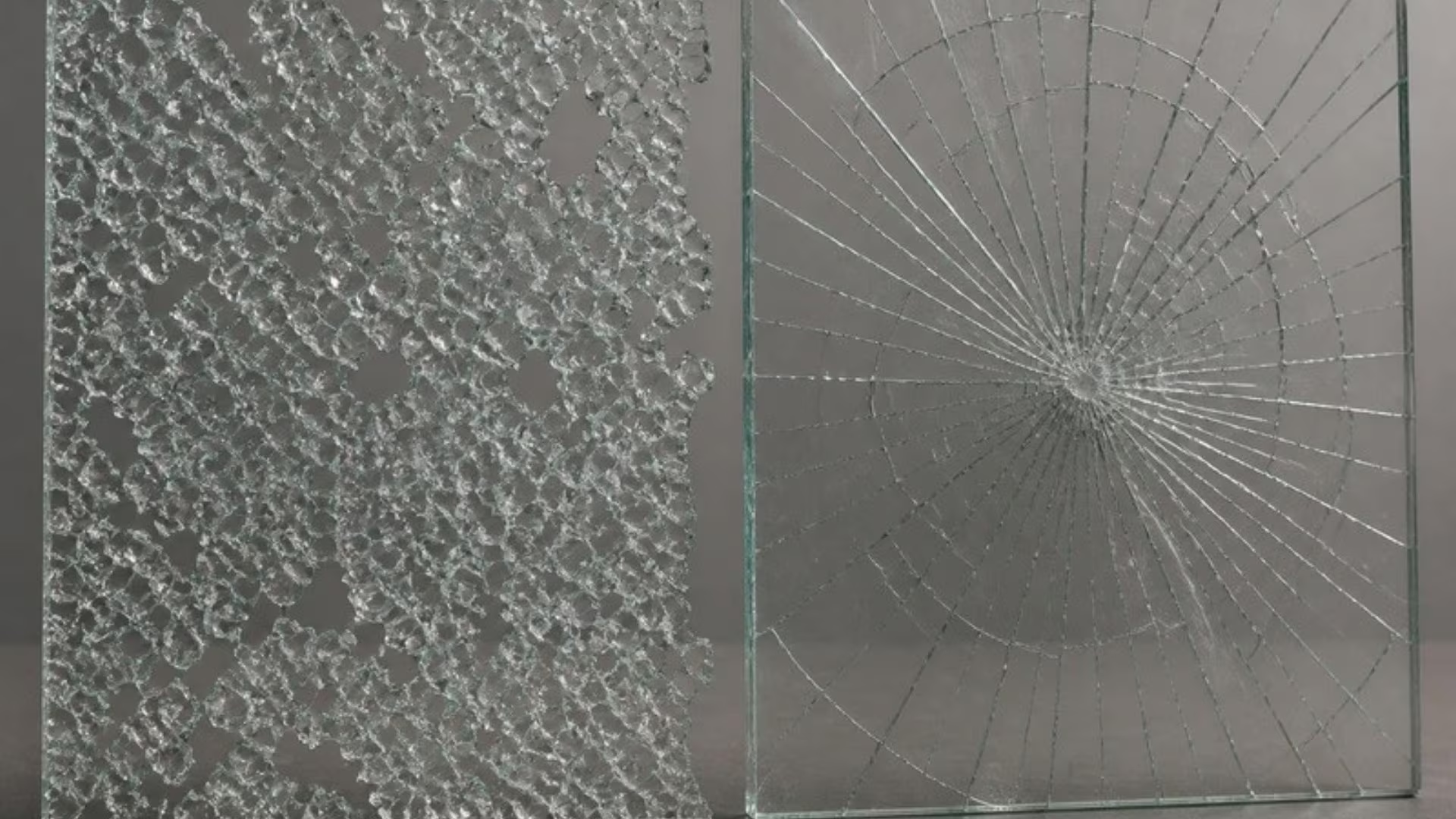
Toughened vs laminated glass: Which do you need?
How each one is made, how each one breaks, and where the rules and common sense call for one, the other, or both.
Last reviewed 8 October 2026 · Written by the Brega Glazing team
In short
| Toughened glass | Heat-treated, about four to five times stronger, breaks into small blunt pieces (EN 12150) |
| Laminated glass | Layers bonded with an interlayer, stays in place when broken (EN 14449) |
| Toughened laminated | Both together, for balustrades, overhead glass and floors |
| Can it be cut later? | Toughened: no. Laminated float: yes |
| Best for security and noise | Laminated |
| Best for strength and heat | Toughened |
Both are safety glass, but they’re safe in different ways. Toughened glass is about strength and breaking safely. Laminated glass is about staying put when it breaks. Choosing the right one depends on what happens if the glass fails.
Toughened glass
Toughened glass is ordinary float glass that’s cut to size, edged and drilled, then heated to around 600 °C and cooled rapidly with jets of air. That locks the outer surfaces in compression, making the glass around four to five times stronger than the same thickness of float glass, and much more resistant to heat. When it does break, it shatters into small, blunt-edged pieces rather than long, sharp shards.
- Standard: EN 12150. Toughened glass usually carries a small etched mark in a corner.
- Can’t be cut afterwards. Every size, hole and notch has to be made before toughening, which is why we need final sizes and hardware positions first.
- Heat soaking (EN 14179) is an extra test that reduces the small risk of a toughened pane breaking spontaneously because of a nickel sulphide inclusion. It’s worth specifying for overhead and high-risk glass.
Laminated glass
Laminated glass is two or more panes bonded together with a plastic interlayer, usually PVB. When it’s hit, the glass may crack, but the pieces stick to the interlayer, and the pane generally stays in its frame.
- Standard: EN 14449.
- Security: it’s much harder to break through, so it’s the security choice for ground-floor glazing.
- Noise: acoustic interlayers make laminated glass very good at reducing noise.
- UV: the interlayer blocks most UV, which helps protect furnishings from fading.
Toughened laminated: when you need both
Some glass has to be strong and stay in place if it breaks. That calls for panes that are toughened first, then laminated together:
- Glass balustrades, so that if one ply breaks, the guard still holds.
- Overhead glass: canopies, glass roofs, verandas and rooflights.
- Glass floors and stair treads.
Which glass where?
- Shower screens and enclosures: toughened. See shower glass.
- Internal glass doors and partitions: toughened, or laminated where sound or extra safety matters.
- Splashbacks: toughened, as it handles heat behind hobs. See glass splashbacks.
- Low-level glazing and glass in and beside doors: safety glass, toughened or laminated.
- Ground-floor windows and doors for security: laminated.
- Bedrooms on busy roads: acoustic laminated.
- Balustrades, canopies, glass roofs and rooflights: toughened laminated, or laminated as the minimum.
- Table tops and shelves: toughened.
More guides
Toughened and laminated glass FAQs
Which is stronger, toughened or laminated glass?
Toughened glass is stronger, around four to five times stronger than ordinary float glass of the same thickness. Laminated glass isn’t necessarily stronger, but it holds together when broken. For the best of both, use toughened laminated glass.
Can toughened glass be cut or drilled?
No. Once glass has been toughened, any attempt to cut, drill or grind it will shatter it. All cutting, holes and cut-outs must be done before toughening.
Why is laminated glass used for glass roofs and canopies?
Because if overhead glass breaks, it must not fall on people below. Laminated glass stays bonded to its interlayer and remains in place, which is why it’s required for glass overhead.
How can I tell if glass is toughened?
Toughened glass usually has a small permanent mark etched into one corner, referencing the standard (EN 12150). If there’s no mark, it’s best not to assume it’s safety glass.
What is heat-soaked glass?
It’s toughened glass that has been put through an extra heat test (EN 14179) to weed out panes with nickel sulphide inclusions, which can occasionally cause toughened glass to break on its own. It’s recommended for overhead and high-risk applications.