
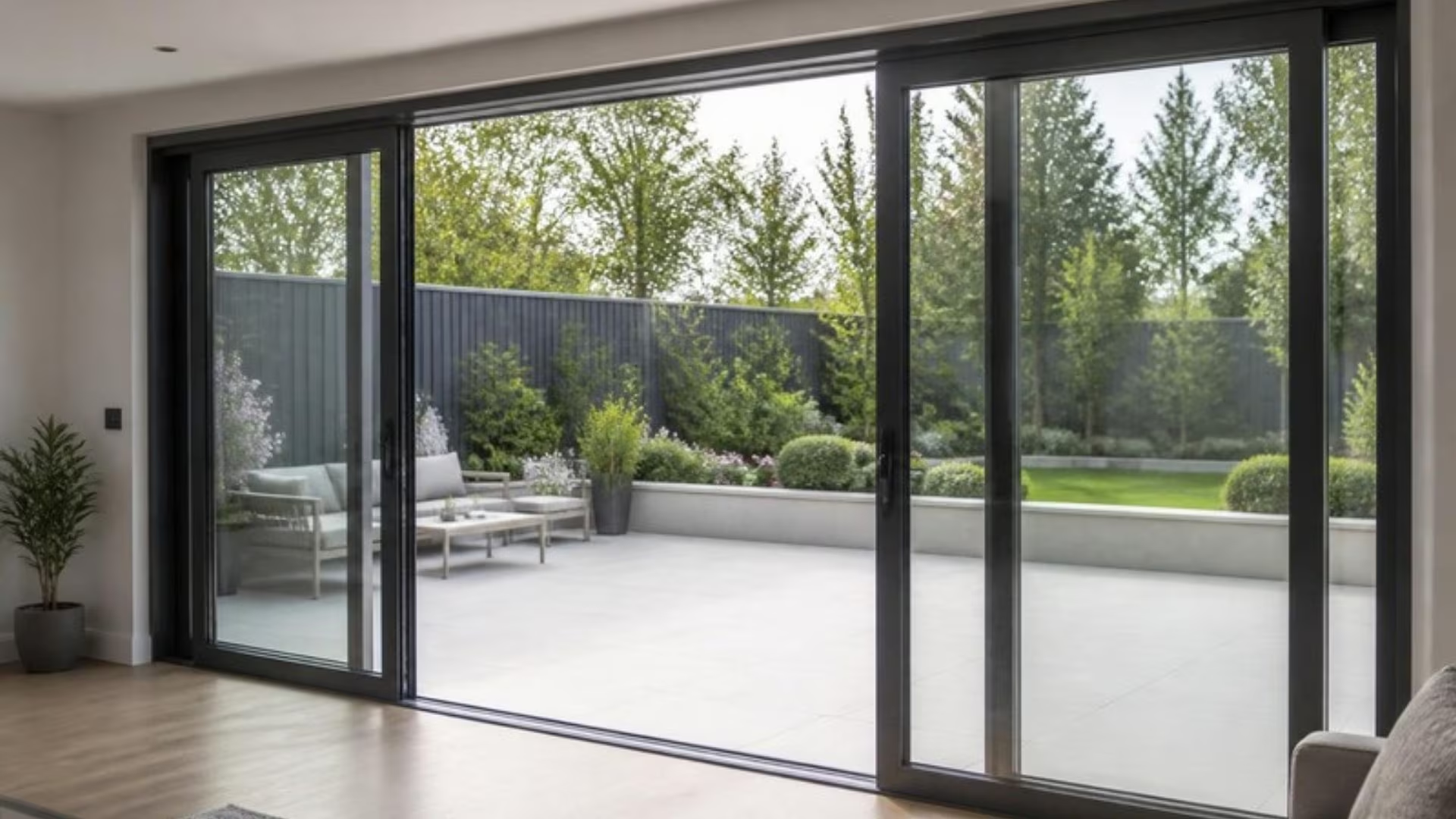
Patio sliding doors
Big panes of glass on a smooth, quiet track. Slim aluminium or uPVC sliders, with lift-and-slide and tilt-and-slide options, for the best view of the garden all year round.
What are patio sliding doors?
Patio sliding doors are large glazed panels that slide past one another on tracks set into the frame. One or more panels open by gliding sideways, so nothing swings into the room or out onto the patio. In aluminium, the frames and the meeting rails between panels can be very slim, so most of what you see is glass.
Patio sliding doors at a glance
- Configurations: Two, three or four panels, with one or more sliding
- Frame: Thermally broken aluminium with slim interlocks, or multi-chamber uPVC
- Glazing: Toughened safety glass, double or triple glazed
- Operation: Inline slide, lift and slide, tilt and slide or parallel slide
- Threshold: Standard or low threshold, with drainage designed in
- Security: Multi-point hook locks and anti-lift protection
Why choose sliding doors?
More glass, less frame. Sliding panels can be much bigger than bifold panels, so when the doors are shut you get a clear, almost uninterrupted view of the garden. In Ireland the doors are shut far more often than they’re open, so that view matters.
Nothing in the way. Panels slide rather than swing, so furniture can sit close to the doors, and there’s no stack of folded panels in the corner.
Open a little or a lot. Slide a panel back a hand’s width for air on a showery day, or all the way for a barbecue.
Four ways a patio door can slide
Sliding doors differ in how the panel moves. That decides how heavy a panel can be, how low the threshold goes and whether the door can be left open for air.
| Type | How it opens | Best for |
|---|---|---|
| Inline slide | The panel rolls along a track past a fixed panel | Everyday patio doors and tighter budgets |
| Lift and slide | Turning the handle lifts the panel onto its rollers. Turning it back lowers it onto the seals and locks it | Large, heavy, triple glazed panels and wide openings with a low threshold |
| Tilt and slide | Tilts in at the top for ventilation, or pulls out and slides open | Smaller patio doors and apartments where you want secure airing |
| Parallel slide | The panel steps out parallel to the frame, then slides. It can also be parked slightly open for air | Medium-sized doors that need easy one-handed use |
Lift and slide in more detail
On heavier systems, turning the handle lifts the panel slightly off its seals and onto its rollers. It then glides with very little effort, even when the panel is large and triple glazed. Turn the handle back and the panel drops down onto its seals, locking tight and weather-sealed. It costs more than a standard inline slider, but on big panels the difference in feel is obvious.
Aluminium or uPVC sliders?
Aluminium gives the slimmest frames and meeting rails and the biggest panels. uPVC sliders use deep multi-chamber profiles with the same lift-and-slide or tilt-and-slide hardware. The frames are chunkier, but they insulate well and cost less. If the rest of the house has uPVC windows, a matching uPVC slider keeps everything consistent.
How we survey, supply and fit sliding doors
- Survey. We measure the structural opening, check that the floor is level, and agree the threshold height and drainage with you or your builder.
- Specification. We decide the number of panels, which ones slide, the glass, the colours and the lock.
- Made to measure. Frames and panels are made to your opening. The glass is toughened safety glass throughout.
- Fitting. We fix the frame dead level, seal it to the building and set up the rollers so each panel glides with one hand.
- Handover. We show you the locks, and how to keep the track and drainage clear.
Choosing patio sliding doors
Panel layout. Two panels (one fixed, one sliding) suit openings up to around three metres. Wider openings can have three or four panels, opening from the centre or to one side.
Threshold. A low threshold gives a near-level step to the patio. It needs a drainage channel outside and good fall away from the door, so we’ll plan it with your builder or landscaper.
Glass. Toughened safety glass is standard. Add solar control glass for south or west-facing doors, and consider triple glazing on north-facing elevations.
Matching. Sliders look best when they match the windows in the same frame system and colour. See our aluminium windows.
Patio sliding door ideas
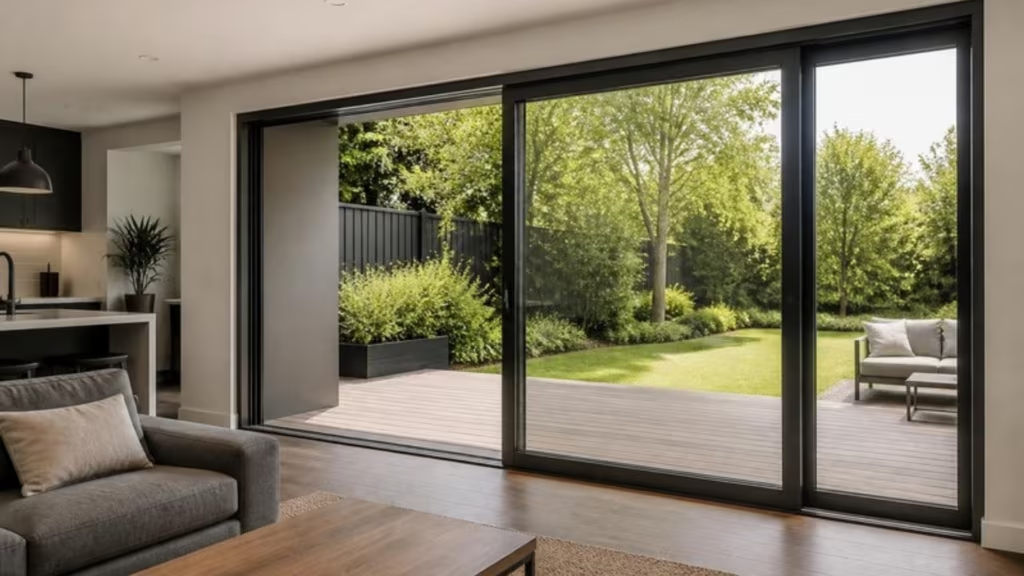
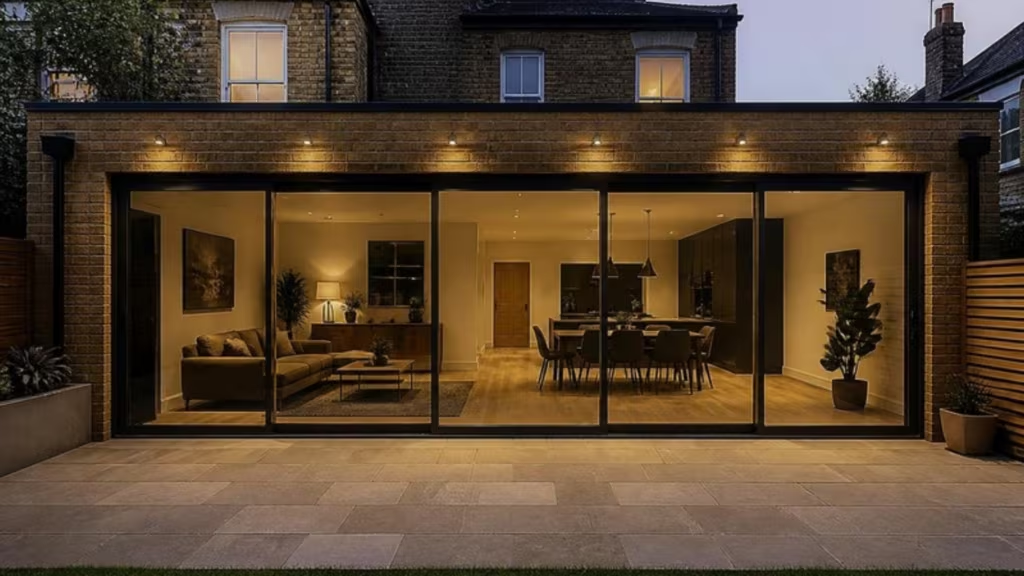
These are illustrations of design ideas, not photos of specific Brega Glazing jobs. See more in our ideas gallery.
Typical uses for patio sliding doors
Patio sliding door FAQs
How wide can patio sliding doors be?
Very wide. Multiple panels can span a large opening, and big single panels are possible on heavier lift-and-slide systems. The practical limits are panel weight, getting the glass on site, and the size of the structural opening. We’ll recommend a layout once we’ve measured.
Are sliding patio doors secure?
Modern aluminium sliders use multi-point hook locks and anti-lift blocks, which stop panels being lifted out of the track from outside. Laminated glass adds another layer of protection for ground-floor doors.
Can I get a level threshold with sliding doors?
A low or near-flush threshold is possible. It needs to be designed with drainage: a channel drain outside the door and a fall away from the house. Without them, wind-driven rain can find its way in.
Bifold or sliding doors: which is better?
Sliding doors give more glass and less frame when closed. Bifolds open almost the full width. Choose sliding doors if the view matters most, and bifolds if you want the room to open completely onto the garden.
How do I clean the track on a sliding door?
Vacuum loose dirt from the bottom track every few months, wipe it with a damp cloth, and make sure the drainage slots are clear. Avoid oil or grease on the track, as it collects grit.