
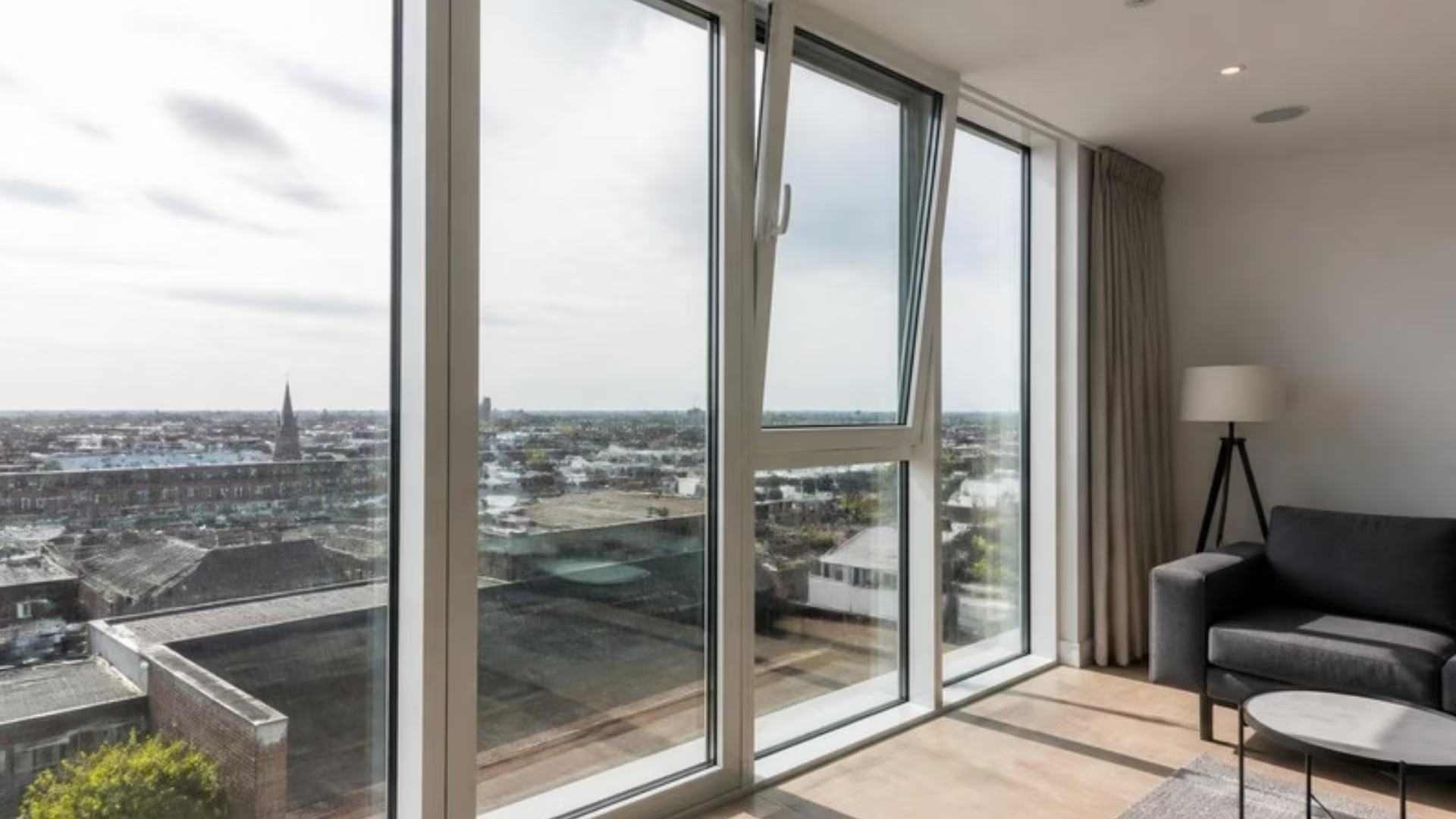
uPVC windows
Warm multi-chamber frames at a sensible price, made to measure for every opening and fitted properly.
What is a uPVC window?
A uPVC window has a frame and opening sash made from rigid, unplasticised PVC profiles. Inside each profile is a row of sealed air chambers that slow heat loss, plus steel or composite reinforcement that keeps the frame straight. The glass is a sealed double or triple glazed unit, and rubber gaskets close the gap between sash and frame.
uPVC is the most common replacement window in Irish homes for a simple reason: it gives very good insulation for the money. A well-made uPVC window easily meets the 1.4 W/m²K U-value the SEAI windows grant asks for, and the deeper profiles go well below it.
uPVC windows at a glance
- Profile depth: 70 mm to 85 mm, depending on the range
- Chambers: 5 to 7 insulating chambers in the frame
- Seals: Two gaskets as standard, three (with a centre seal) on the deeper ranges
- Glazing: Double or triple glazed, low-e glass, argon fill and warm-edge spacers
- Performance: Whole-window U-value of 1.4 W/m²K or better, and down to about 0.8 W/m²K with triple glazing in the deeper profiles
- Finishes: White, woodgrain foils and anthracite grey, on one side or both
- Opening types: Casement, tilt & turn, sliding and fixed
uPVC window ranges we fit
Every window is made to measure. What changes between ranges is how deep the frame is, how many chambers and seals it has, and how thick a glass unit it can carry. Deeper frames hold heavier triple glazing and insulate better, at a higher price.
| Range | Frame depth | Chambers and seals | Best for |
|---|---|---|---|
| Standard | About 70 mm | 5 chambers, 2 seals | Budget replacements, rental properties, utility rooms and garages |
| Energy | About 76 mm | 5 to 6 chambers, 2 or 3 seals | Most whole-house replacements, double or triple glazed |
| Premium | 82 to 85 mm | 6 to 7 chambers, 3 seals | Triple glazing, deep retrofits, A-rated new builds and busy roads |
| Flush sash | 76 to 82 mm | Sash sits level with the frame | Cottages, period-style houses and clean contemporary looks |
Depths and chamber counts vary slightly between profile systems. We confirm the exact system, U-value and glass build-up in your written quote.
Four ways to fit them
Standard replacement. The old frame comes out, the new frame is fixed, levelled, insulated and sealed into the opening, and the reveals are made good. This is what we do on most Irish houses because it gives the most glass and the best seal.
Renovation frame. The old frame is cut back and left in place, and the new frame fits over it with cover trims inside and out. There’s no damage to plaster or render and each window takes less time, but you lose a little glass on every side. We only suggest it where the old frame is sound and dry.
Windows for insulated walls. When a house is getting external wall insulation or a new build has thick insulated walls, the window should sit in the insulation layer. Deeper frames, insulated sill pieces and sealing tapes keep that joint warm and stop cold bridging around the frame.
With a built-in shutter box. On new builds and big renovations the window can come with a roller shutter box sitting on top of the frame, hidden behind render and serviced from inside. See our roller shutters for the options.
Choosing your uPVC windows
Colour. White is the standard and the best value. Woodgrain foils such as golden oak and walnut suit older houses, and anthracite grey is now the most asked-for colour. Foils can go on the outside only, keeping white inside, or on both faces.
Reinforcement. Every frame and sash we fit is reinforced. Large sashes, tall windows and dark colours, which get warmer in the sun, need heavier steel. We size it from the window, not from a price list.
Glass. Low-e double glazing is the baseline and triple glazing suits the deeper ranges. Add acoustic laminated glass for road noise, satin or obscure glass for bathrooms, and solar control glass for big south-facing panes.
Hardware. Multi-point locking, lockable handles, restrictors on upstairs windows and trickle vents for background ventilation are all standard options. Corners can be standard welded or neat V-groove welded for a cleaner joint.
uPVC or aluminium?
uPVC wins on price and insulates just as well. Aluminium windows win on slim frames, big panes and any RAL colour. Plenty of houses mix the two: uPVC windows throughout, with aluminium sliding doors or bifolds on the extension. Our aluminium vs uPVC guide compares them line by line.
How we survey, supply and fit uPVC windows
- Survey. We measure every opening, check the reveals, sills and cavity closers, and agree which sashes open and which are fixed.
- Specification. We pick the range, glass, colours and hardware with you, and put all of it in writing with the U-value of each window.
- Made to measure. The windows are built to the surveyed sizes, glazed and checked before they come to site.
- Fitting. One opening at a time: old frame out, new frame fixed and levelled, the gap insulated and sealed, and the reveals finished.
- Handover. We check every sash opens, closes and locks, adjust where needed, and show you how the tilt, restrictors and vents work.
Typical uses for uPVC windows
- Whole-house window replacement in semi-detached and terraced homes
- Rental properties and apartments where value and low maintenance matter most
- Deep retrofits and A-rated new builds using triple glazed, deeper profiles
- Homes getting external wall insulation, with the windows set into the insulation layer
uPVC window FAQs
Do uPVC windows qualify for the SEAI windows grant?
They can. SEAI looks at performance, not material. The windows need a U-value of 1.4 W/m²K or better, the house has to meet the scheme’s age and insulation rules, and the work must be done by a contractor on SEAI’s register. Check the current rules on seai.ie before ordering. Our SEAI windows and doors grant guide explains the steps.
How long do uPVC windows last?
Good uPVC windows typically last 25 years or more. The frames don’t rot or need painting. The parts that wear are the hinges, handles, locks and gaskets, and those can be adjusted or replaced without changing the window.
Can uPVC windows be triple glazed?
Yes. The deeper ranges, from about 76 mm, are designed to take triple glazed units. Triple glazing is heavier, so we check the sash size, reinforcement and hinges for each window.
Do dark uPVC windows warp in the sun?
Not when they’re made properly. Dark foils get warmer than white, so the frames need suitable reinforcement and a foil designed for dark colours. On very large dark sashes we may suggest aluminium instead.
What is the difference between a uPVC casement and a tilt and turn window?
A casement opens outward on side or top hinges, like most Irish windows. A tilt and turn opens inward, either tilting at the top for ventilation or swinging fully open for cleaning. Both are available in uPVC. See casement windows and tilt and turn windows.