
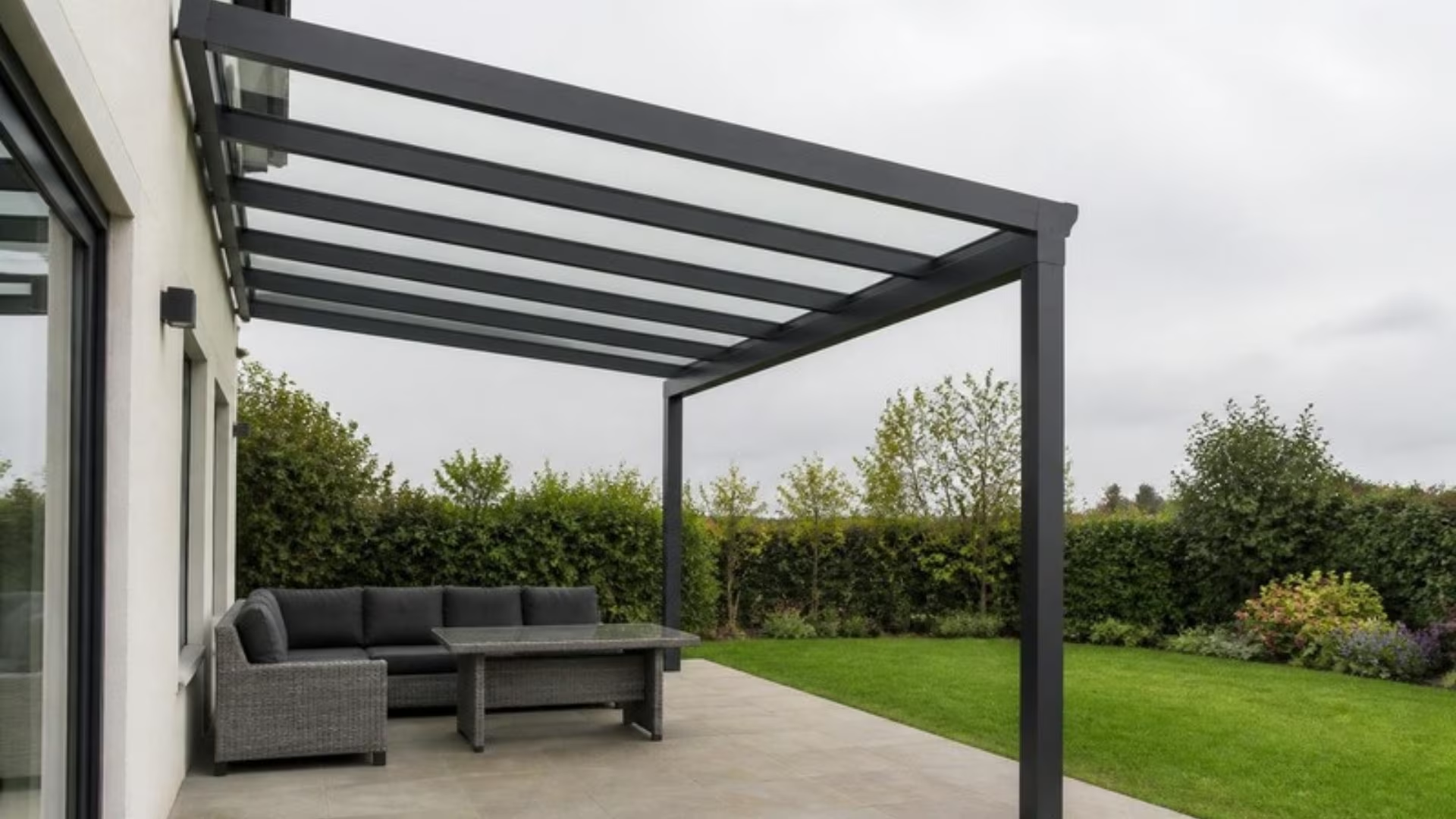
Glass or polycarbonate roof for a veranda or pergola?
Light, noise, heat, weight, cost and lifespan compared, so you can choose the right roof for how you’ll use the space.
Last reviewed 8 October 2026 · Written by the Brega Glazing team
In short
| Clearest view of the sky | Glass |
| Quietest in rain | Glass |
| Lightest structure | Polycarbonate |
| Lowest initial cost | Polycarbonate |
| Longest-looking-new | Glass |
| Softest, diffused light | Opal polycarbonate or satin glass |
The roof is the biggest single choice when you’re planning a veranda or a glass-roof pergola. It decides how the space looks from below, how it sounds in the rain, how warm it gets and how much light reaches the room behind it.
Light and view
Glass gives a clear view of the sky, clouds and trees. It feels like sitting outside with a ceiling you can’t see. Polycarbonate, especially the multiwall sheets used for roofs, scatters the light. It’s bright and soft, but you see light and shapes rather than a view. If the roof is right outside your kitchen window, glass keeps the room feeling as it did before.
Noise in the rain
This one surprises people. Rain on polycarbonate makes a noticeable drumming sound, which can be loud in a heavy shower. Laminated glass is heavier and much quieter. If you plan to sit under the roof during rain, which is the point of a roof in Ireland, it matters.
Heat
Both can overheat a south-facing space on a bright day if you choose the wrong version. Opal and tinted polycarbonate cut glare and heat well. With glass, solar control or tinted laminated glass does the same job and keeps the view. Leaving the sides open, or adding opening sections, keeps air moving.
Weight and structure
Polycarbonate sheets are very light, so the frame can be lighter and slimmer for the same span. Glass is heavy and needs a stronger structure and fixings. Both have to be designed for wind and, on exposed sites, snow loads.
Safety
Overhead glass must be laminated, so a broken pane stays in place. Polycarbonate is very impact-resistant and doesn’t shatter.
Lifespan and looks
Glass doesn’t scratch easily, doesn’t yellow and looks the same in 20 years as on day one. Polycarbonate with good UV protection lasts well, but it can scratch, dull and discolour over time, particularly cheaper sheets.
Cost
Polycarbonate is cheaper up front, in both the sheets and the lighter structure. Glass costs more but lasts longer looking new, and most people find it more pleasant to sit under.
Which should you choose?
- Choose glass if the roof is outside a living space, you’ll sit under it often, or you might enclose it later as a glass room.
- Choose polycarbonate for covered walkways, utility areas, car ports and budget-led projects.
More guides
Glass and polycarbonate roof FAQs
Is a glass roof or polycarbonate roof better for a veranda?
Glass is better for light, view, quietness and looks over time. Polycarbonate is lighter and cheaper. For a veranda outside a kitchen or living room that you’ll use often, most people prefer glass.
Is a polycarbonate roof noisy in the rain?
Yes, noticeably more than glass. Rain on polycarbonate drums, while laminated glass is much quieter.
Does a glass veranda roof get too hot?
It can on a sunny south-facing patio with clear glass. Solar control or tinted laminated glass and good ventilation keep it comfortable.
What glass is used for veranda roofs?
Laminated safety glass, often toughened laminated for larger panes, so the glass stays in place if it breaks.