
Exterior & Garden
Roller shutters & external blinds
Aluminium roller shutters for homes and businesses, giving security, privacy and proper darkness at the push of a button. Plus external blinds for shade without losing the view.
What are roller shutters?
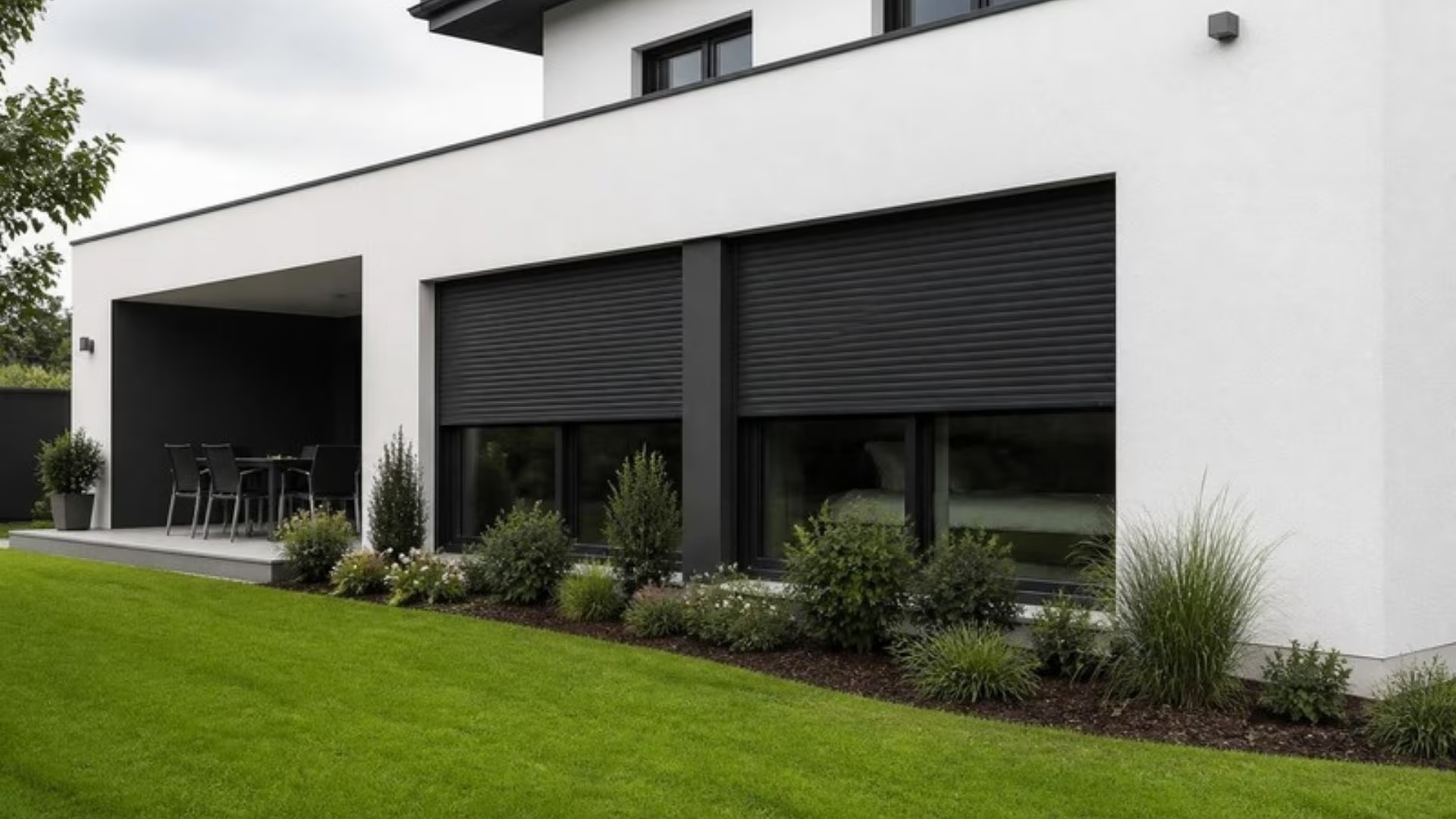
A roller shutter is a curtain of interlocking aluminium slats that rolls up into a box above a window or door and runs down in side guides to cover it. Lowered, it makes the opening far harder to break into, blocks light completely and adds an extra layer against wind, rain and heat loss. Raised, it disappears into its box. Roller shutters have been standard across much of Europe for decades. In Ireland they’re increasingly fitted for security, for blackout in bedrooms, and on holiday homes left empty for weeks.
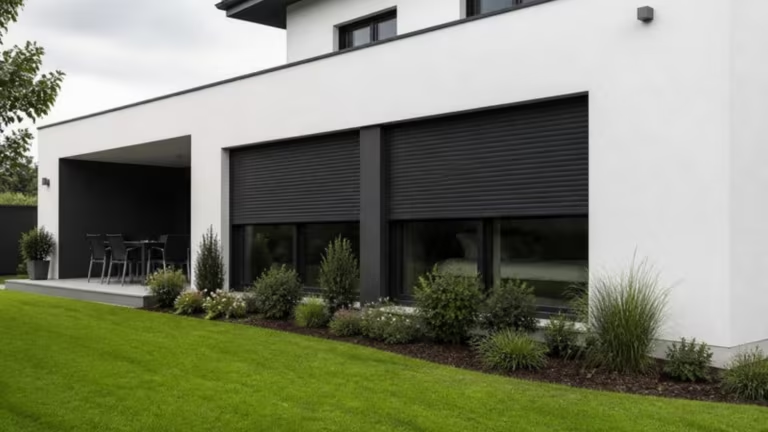
Electric roller shutters
Motorised shutters for windows and patio doors, controlled by switch, remote, timer or app.
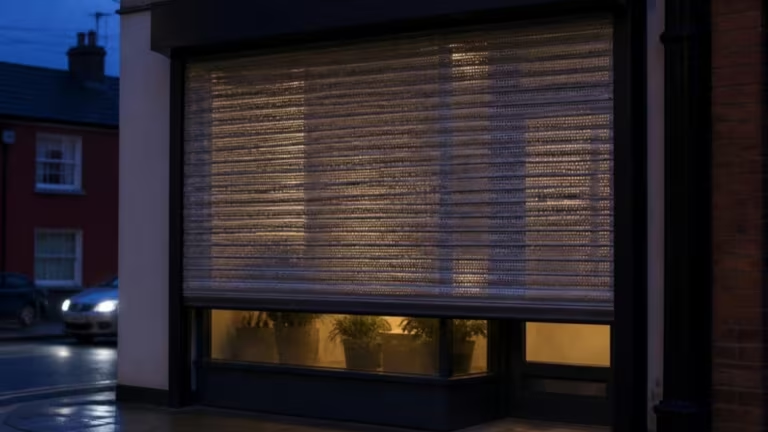
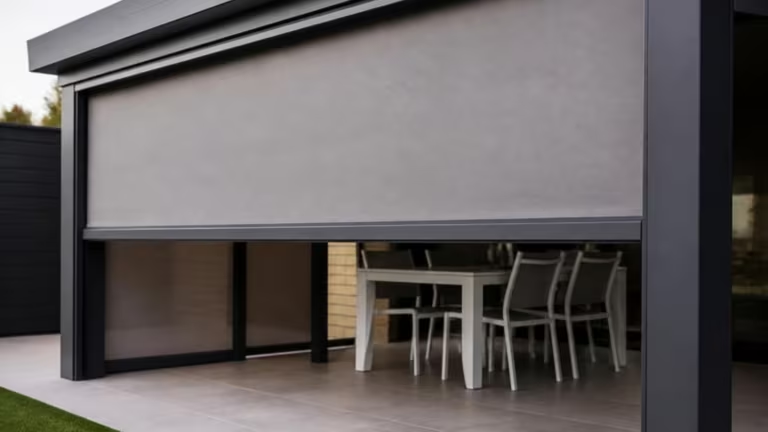
External blinds & zip screens
Venetian blinds and zip screens on the outside of the glass, for shade without losing the view.
What shutters do well
- Security. A lowered shutter is a strong, visible deterrent and a physical barrier.
- Darkness. Real blackout for bedrooms, nurseries and anyone who works nights.
- Privacy. Close them in the evening on rooms that face the road.
- Weather and heat. The trapped air between the shutter and the glass adds insulation, and lowered shutters protect glass in storms.
- Peace of mind when you’re away. Timers raise and lower them so the house looks lived in.
Manual or motorised?
Small windows can have manual shutters operated by a strap or crank. For anything larger, or anything you’ll use daily, motorised is far easier. A switch, remote or timer does the work, and the motor can stop automatically if it meets an obstacle. Every motorised shutter on an escape window must have a way to open it from inside during a power cut, such as a manual override or battery backup. We specify this as standard.
Where the shutter box goes
Every roller shutter rolls up into a box above the opening. Where that box sits changes how the house looks and when it has to be planned.
- Surface-mounted. The box fixes to the outside wall above the window. It suits any existing window, goes up quickly and is the usual choice on houses that are already built.
- In the reveal. The box sits just inside the window opening, so less of it shows on the front of the house. You lose a little glass height at the top.
- Top-mounted with new windows. The box sits on top of the new window frame, inside the wall, hidden by render or external insulation and serviced from inside the room. It has to be ordered with the windows, so it suits new builds, window replacements and insulation upgrades. Some systems take a built-in insect screen too.
Want shade rather than darkness? External blinds and zip screens use the same kinds of boxes and guides.
Planning and shutter boxes
Shutters at the back of a house rarely raise questions. On the front, a visible shutter box can be seen as changing the appearance of the house. Protected structures and Architectural Conservation Areas need planning permission. Shopfront shutters often need permission too, and many councils prefer perforated or internal shutters to solid external ones. Ask us at survey and we’ll tell you what we see.
Roller shutter FAQs
Do roller shutters help keep the house warm?
They help. The air trapped between a lowered shutter and the window adds a layer of insulation, and foam-filled aluminium slats cut draughts and heat loss through the glass at night. They’re not a substitute for good windows, but they add to them.
What happens to electric shutters in a power cut?
The shutter stays where it is. On escape windows, and anywhere you might need to open them, we fit a manual override or battery backup so they can be raised without power.
Can roller shutters be fitted to existing windows?
Yes. On existing houses, the shutter box is usually mounted on the outside wall above the window, with guides down each side. On new builds and renovations, the box can be hidden in the lintel or under the render.
Do I need planning permission for roller shutters?
Not usually for shutters at the back of a house. Shutters on the front can need permission if they materially change how the house looks, and protected structures, Architectural Conservation Areas and shopfronts often do. Check with your council if you’re unsure.