
Exterior & Garden
Composite decking
Composite boards on an aluminium or treated subframe. A deck that doesn’t rot, splinter or need oiling every spring.
What is composite decking?
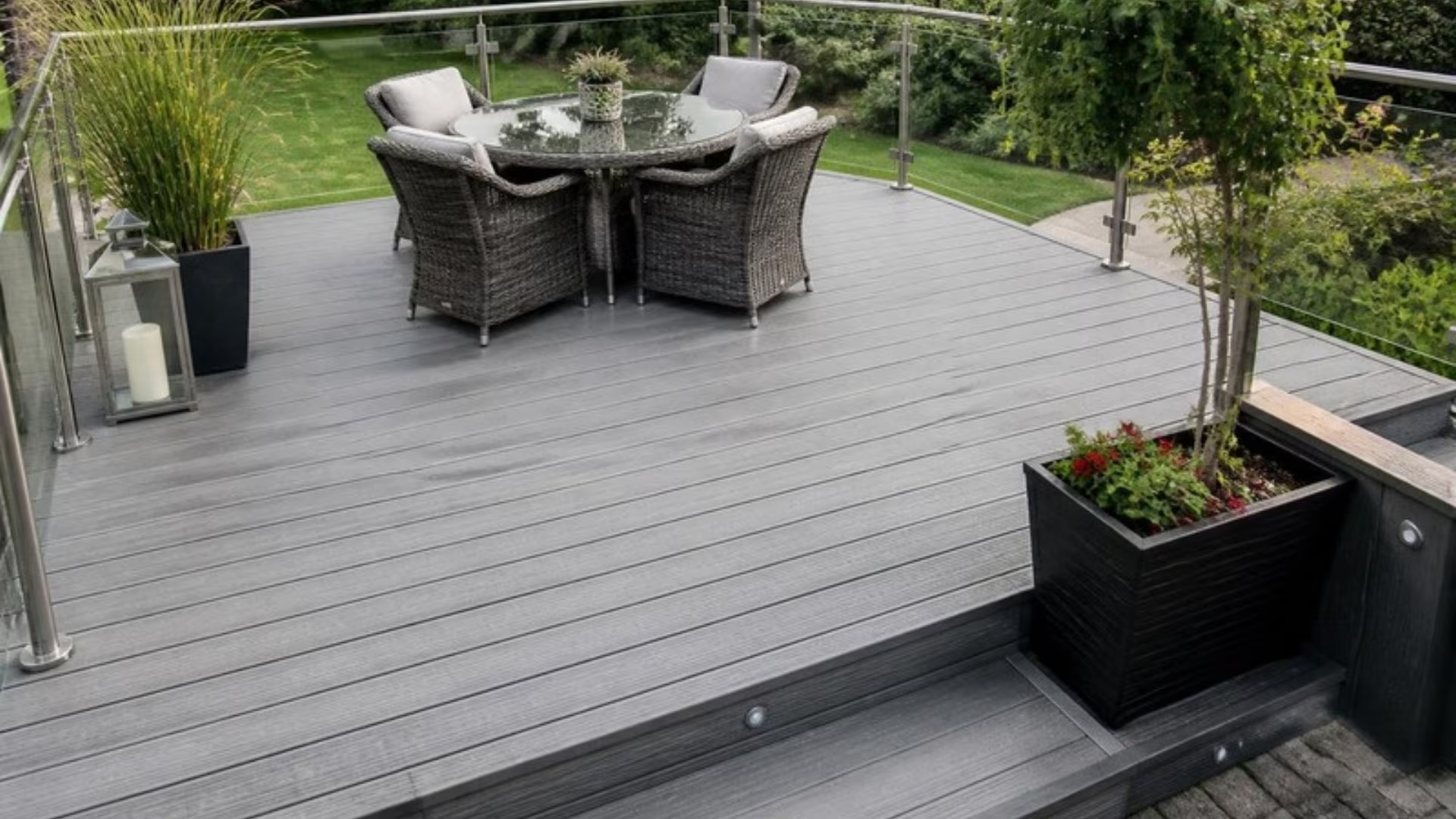
Composite decking boards are made from a blend of wood fibre and recycled plastic. The better boards are capped: wrapped in a tough polymer shell that resists stains, fading and moisture. They look like timber from a short distance, but they don’t rot, split, splinter or need staining. Laid on a proper subframe with drainage, a composite deck stays a deck rather than becoming a slippery, sagging job for every spring.
| Boards | Capped composite, grooved or wood-grain finish |
| Subframe | Aluminium joists, or treated timber |
| Fixing | Hidden clips, with no screws through the board face |
| Drainage | Gaps between boards and a fall away from the house |
| Edges | Matching fascia boards and trims |
| Add-ons | Glass or aluminium balustrades, steps, lighting |
Why composite?
No rot, no splinters. Irish rain is hard on softwood decks. Composite boards don’t absorb water in the same way, and they won’t splinter under bare feet.
No oiling or staining. An occasional wash with warm soapy water keeps them looking right.
Consistent colour. Capped boards are designed to resist fading and staining. Expect a slight settling of colour in the first months outdoors.
The bit nobody sees: the subframe
A deck is only as good as what it’s sitting on. The subframe must be level and strong, with joists at the spacing the board manufacturer requires, and air must move underneath so nothing stays damp. Aluminium joists don’t rot, which makes them a good match for boards that don’t either. On an existing concrete patio, the frame can sit on adjustable pedestals or battens, as long as water can drain away.
Slip resistance in a damp climate
Any outdoor surface can get slippery when algae grows in shade. Composite boards with a textured or grooved surface grip better, and washing the deck a couple of times a year stops algae taking hold. On shaded, north-facing decks we’ll recommend the boards with the best grip.
Height, guarding and planning
Decks at or near ground level are generally treated like patios and paths, which are exempt as long as ground levels aren’t raised or lowered by more than a metre. A raised deck needs guarding where there’s a drop, built to Building Regulations heights. See our aluminium balustrades and glass balustrades. Raised decks that overlook neighbours deserve a conversation with the council before you build.
How we survey, supply and fit composite decking
- Survey. We measure the area, check levels, ground conditions and drainage, and agree the deck height and steps.
- Design. We choose the boards, colour, subframe, edging, steps and any balustrade or lighting.
- Subframe. We build a level, well-drained frame at the correct joist spacing.
- Boards. We lay the boards with hidden clips, leaving the expansion gaps the manufacturer specifies, then fit fascias and trims.
- Handover. We show you how to clean and care for the deck.
Composite decking FAQs
Is composite decking slippery?
Good composite boards with a textured or grooved surface grip well, even when wet. Like any outdoor surface, they can get slippery if algae builds up in shade, so wash the deck a couple of times a year.
How long does composite decking last?
Quality capped composite boards are designed to last for decades. Manufacturers often back them with long warranties. The subframe matters just as much, which is why we recommend aluminium joists or properly treated timber with good ventilation.
Does composite decking get hot in the sun?
Dark boards in direct sun can get warm underfoot on hot days, like any dark surface. Lighter colours stay cooler. In most Irish summers it’s rarely a problem.
Can composite decking go on top of an existing concrete patio?
Yes. The subframe sits on adjustable pedestals or battens over the patio, so water can still drain underneath. The patio needs to be sound and to fall away from the house.
Do I need planning permission for decking?
A deck at or near ground level is generally treated like a patio, which is exempt if ground levels aren’t changed by more than a metre. Raised decks, especially ones that overlook neighbours, should be checked with the council.