
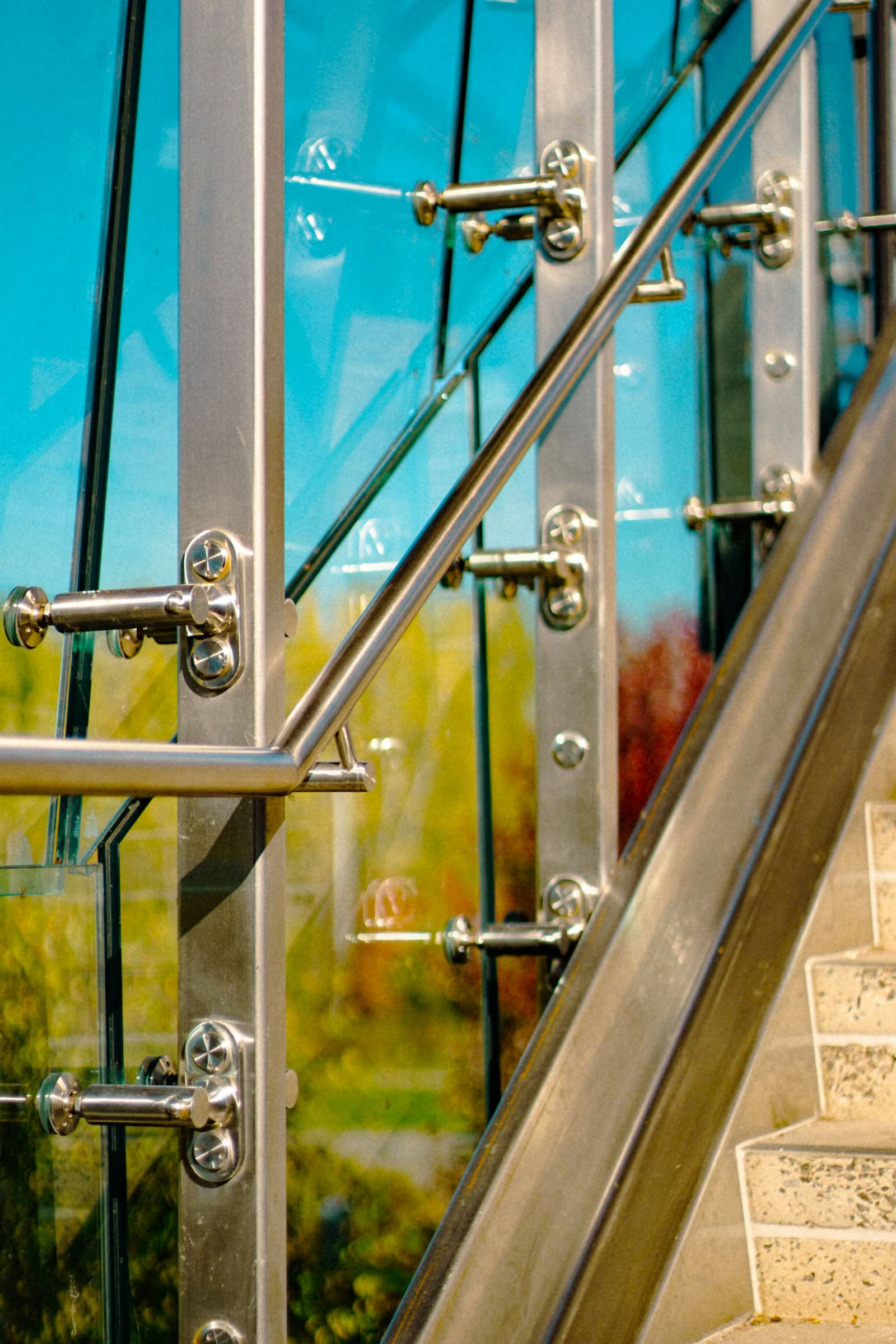
Laminated glass
Laminated glass bonds two or more panes with a tough interlayer, so it stays in place even when it breaks. Made to measure for balustrades, roofs, doors and security glazing.
What is laminated glass?
Laminated glass is made by bonding two or more sheets of glass together with a plastic interlayer, usually PVB (polyvinyl butyral). The layers are pressed and heated in an autoclave until they become a single, clear panel. If the glass is hit hard enough to crack, the fragments stick to the interlayer instead of falling out.
That behaviour makes laminated glass the right choice wherever a broken pane must stay in the frame: overhead glazing, glass balustrades, floors, shopfronts and low-level glazing in busy places. The interlayer also blocks almost all ultraviolet light, which helps protect furniture and displays from fading.
Laminated glass can be made from ordinary float glass, from toughened glass for extra strength, or from a mix of the two. You can read more about how it works in this overview of laminated glass.
Laminated glass specification
- Common builds 6.4, 6.8, 8.8, 10.8 and 12.8 mm
- PVB, acoustic PVB and stiff ionoplast (SentryGlas) interlayers
- Annealed or toughened and heat-soaked plies
- Safety classes to EN 12600, security classes to EN 356
- Clear, low-iron, tinted, satin and coloured interlayers
How we make laminated glass to order
- Specify. We agree the build-up, interlayer and edge finish for your use, from a simple safety pane to a structural balustrade.
- Cut and process. Annealed laminated glass can be cut and edged from stock sheets; toughened plies are cut, drilled and toughened before laminating.
- Laminate. Plies and interlayer are assembled in a clean room, then bonded under heat and pressure.
- Check and deliver. Each panel is inspected for clarity and edge quality before delivery across Ireland.
Choosing the right laminated glass
For doors, low-level glazing and internal screens, a 6.4 or 6.8 mm laminated safety glass usually meets the safety requirement. For roofs, canopies and glass that people may lean on, a thicker toughened laminated glass with a stiffer interlayer is normally needed, and the size and fixing method decide the exact build.
Choose an acoustic interlayer if you want to reduce traffic or office noise, and a thicker 0.76 mm or 1.52 mm interlayer for security against break-ins. Tell us where the glass is going and we will recommend a laminated glass build that suits it.
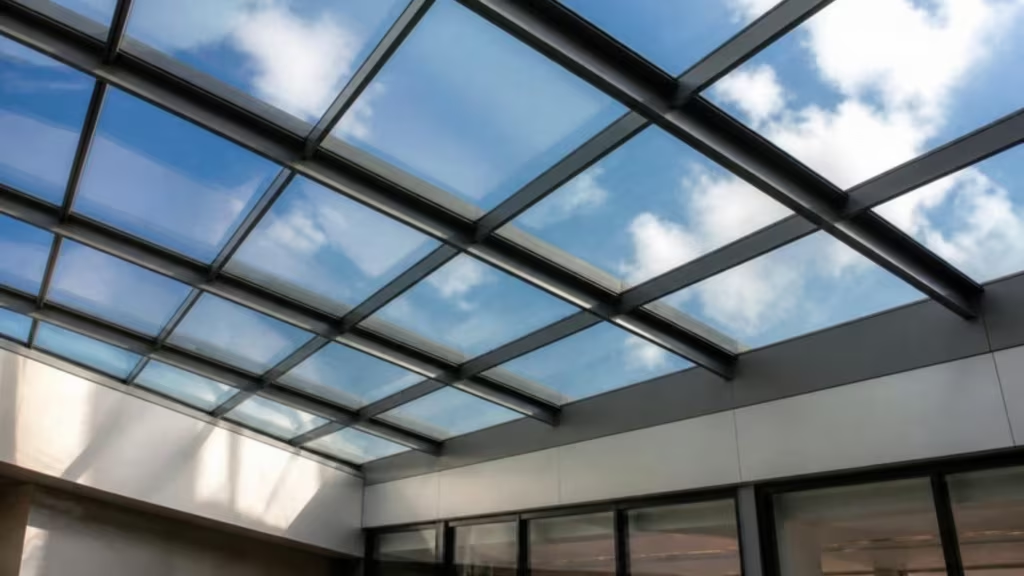
Typical uses for laminated glass
- Glass balustrades and stairs
- Roof glazing, skylights and glass canopies
- Shopfronts and entrances
- Acoustic office partitions
- Security glazing and display cases
Laminated glass FAQs
Is laminated glass the same as toughened glass?
No. Toughened glass is heat-treated to make it stronger, and breaks into small pieces. Laminated glass holds together with an interlayer when broken. For many uses, such as balustrades, the two are combined as toughened laminated glass.
Can laminated glass be cut to size?
Yes, if it is made from annealed glass. Laminated glass made from toughened plies cannot be cut afterwards, so it is made to your exact size from the start.
Does laminated glass reduce noise?
Standard laminated glass already reduces noise better than a single pane of the same thickness, and acoustic interlayers improve this further. It is a popular choice for offices and homes near busy roads.
Does laminated glass block UV light?
Yes. A standard PVB interlayer blocks the vast majority of ultraviolet light, which helps reduce fading of floors, furniture and displayed goods.