
Interiors
Interior glazing
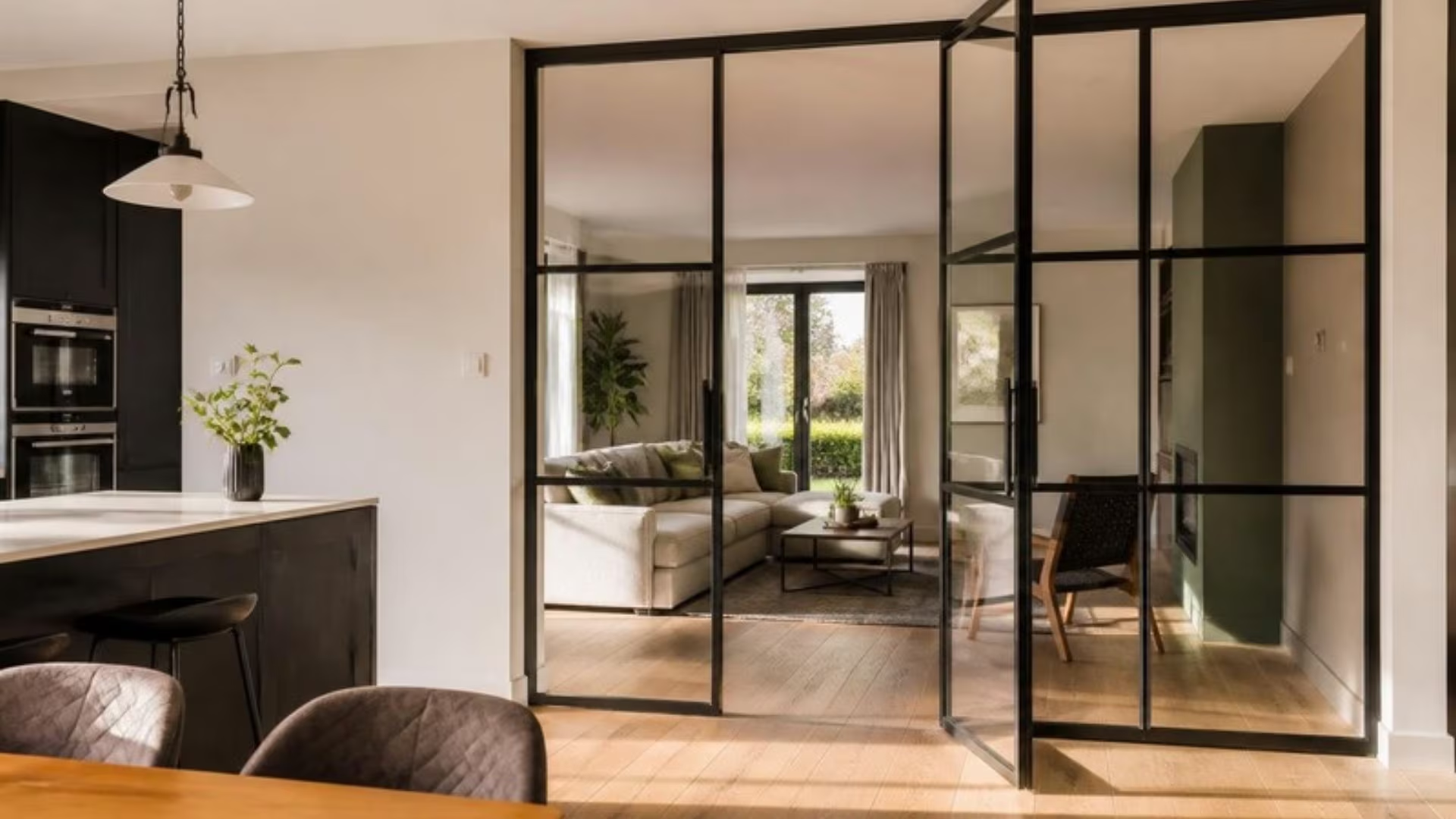
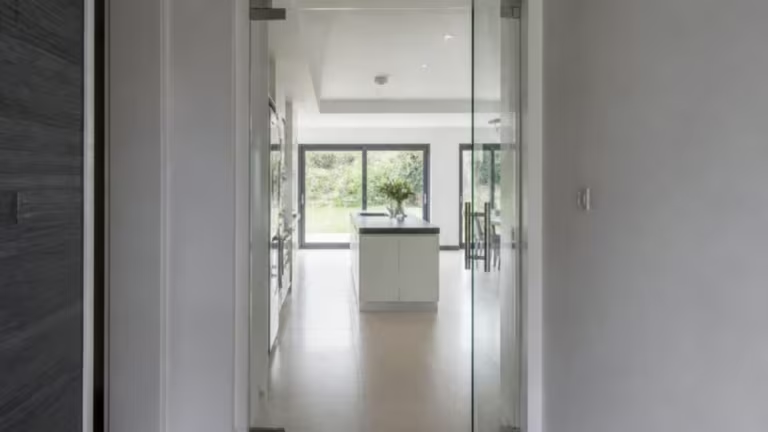
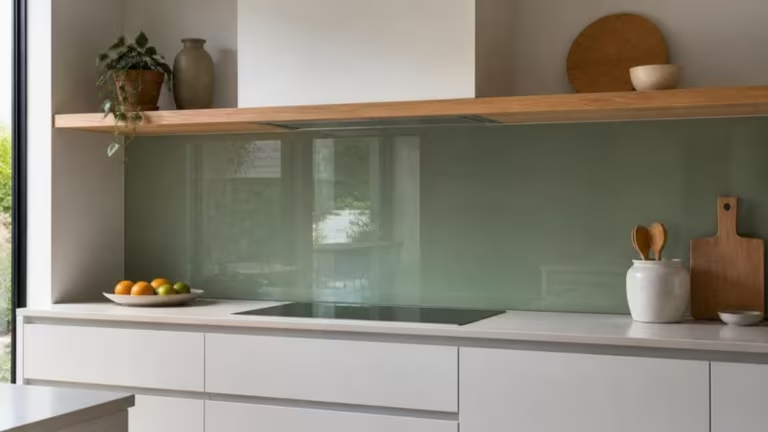
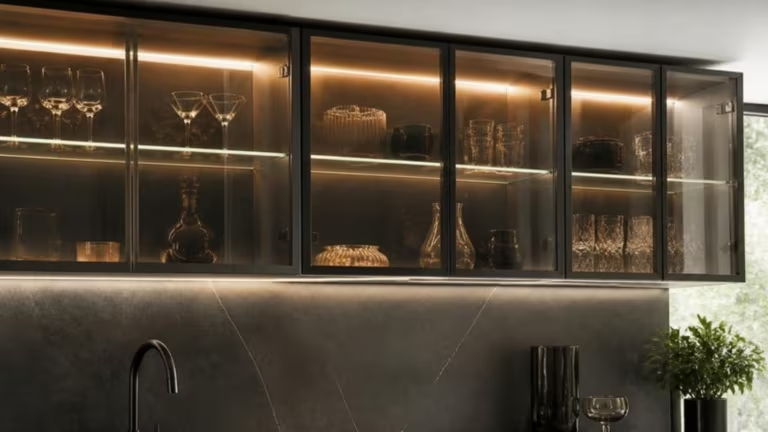
Glass partitions, internal doors, splashbacks and feature glass, cut and processed in-house and fitted to walls that are never quite square.
Glass inside the building
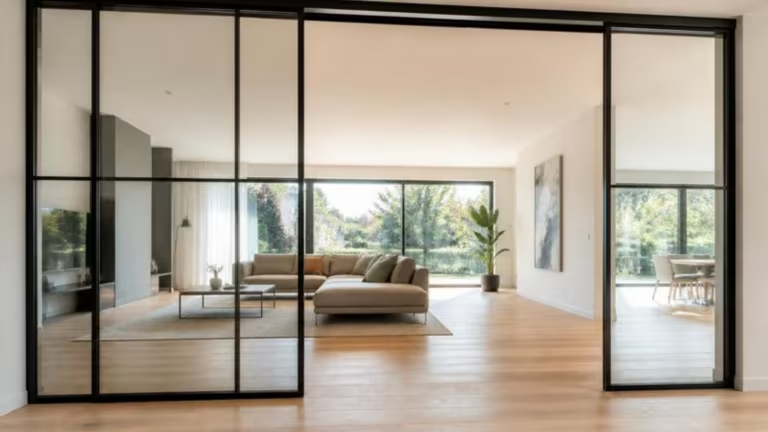
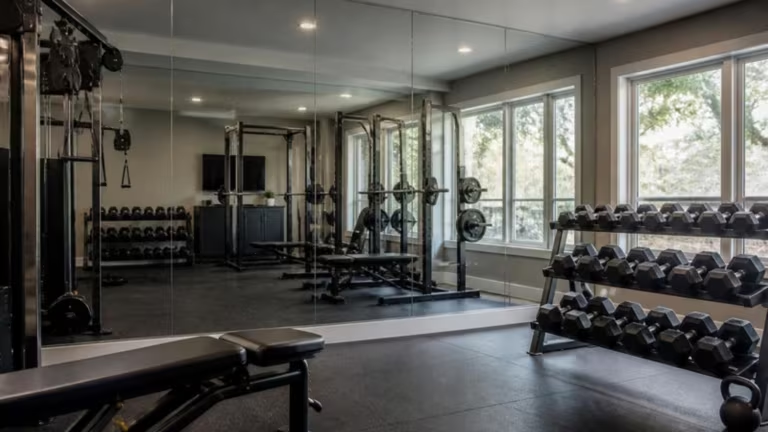
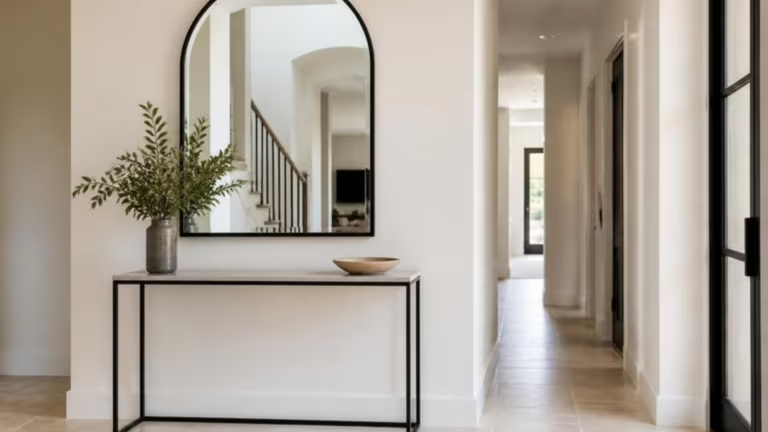
Interior glazing is the glass you live and work with every day: partitions that divide a room without darkening it, internal doors, splashbacks behind the hob, mirrored walls in a gym. Because we cut, edge, drill and toughen the glass ourselves, interior work is where our glass processing really shows. Every piece is made for one specific opening, with the holes and cut-outs in the right place before it’s toughened.
Choosing glass for inside
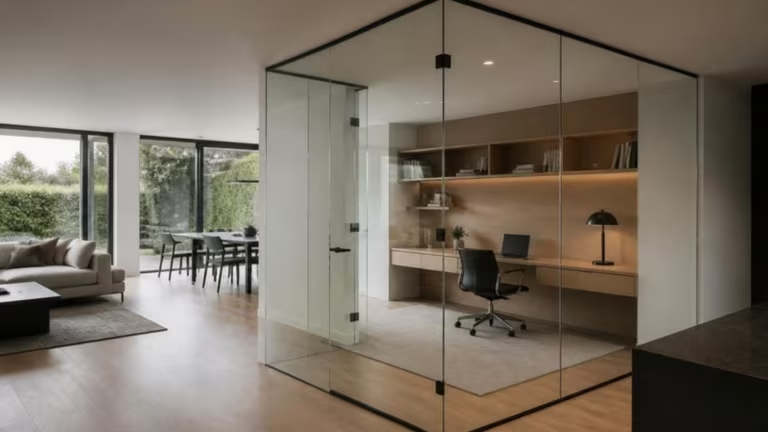
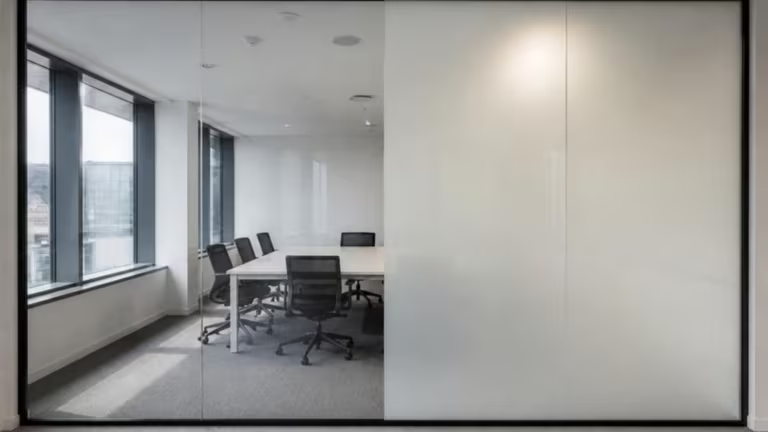
Privacy without losing light. Satin or frosted glass blurs what’s behind it and still passes plenty of light. A frosted band at eye level is often enough. Smart glass switches between clear and opaque whenever you like.
Sound. Laminated glass with an acoustic interlayer cuts noise much better than toughened glass of the same thickness. That makes it the one to use for meeting rooms and home offices.
Clarity. Standard clear glass has a slight green tint, which shows on thick panels and edges. Low-iron glass is noticeably clearer and makes colour-backed glass look true.
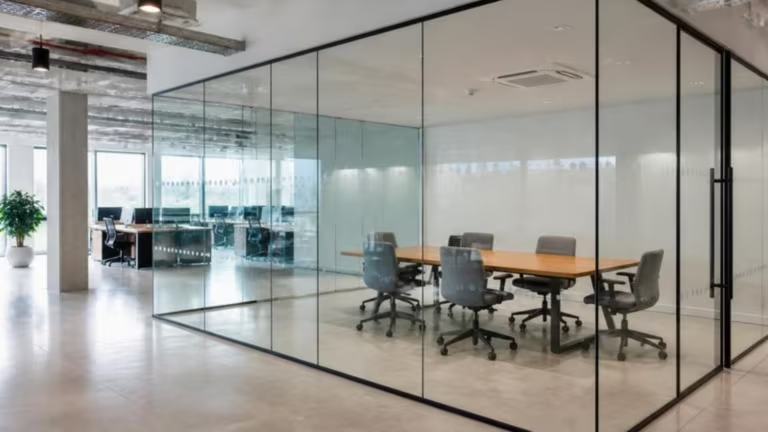
Safety. Glass in doors, low-level panels and partitions should be safety glass: toughened or laminated. In workplaces, large areas of clear glass also need manifestation, a frosted band or dots at eye level, so nobody walks into them.
Fire. Partitions on escape routes or between fire compartments may need fire-resistant glass in a matching tested frame. We’ll ask about this at survey.
How interior glazing jobs run
- Survey or template. We measure on site or work from your templates. Walls, floors and ceilings are rarely true, so we record the actual shape, not the drawing.
- Specification. We confirm the glass type, thickness, edge finish, hardware and every hole position.
- Processing. The glass is cut, edged and drilled, then toughened or laminated. Nothing can be cut once glass is toughened, so this order matters.
- Fitting. We fit channels, patch fittings, hinges or adhesive as the job needs, then seal and clean everything.
Interior glazing FAQs
Do I need planning permission for an internal glass partition?
No. Internal works don’t need planning permission. In commercial buildings, though, partitions can affect fire safety and escape routes. Check with your fire safety consultant or landlord before you divide a space.
How thick is the glass in a frameless partition?
Frameless partitions typically use 10 or 12 mm toughened glass, or laminated glass where better sound reduction or extra safety is needed. Taller or wider panels need thicker glass, and we’ll recommend the right thickness for your sizes.
Can a glass partition be soundproof?
No glass partition is fully soundproof, but you can get close to a solid stud wall. Use laminated glass with an acoustic interlayer, seal the edges well, and choose doors with proper seals. Double-glazed partitions go further still.
Can you fit glass to walls that aren’t square?
Yes, that’s normal. We measure or template every opening, and channels and seals take up small differences. Big variations are handled by cutting the glass to the actual shape.
How do I clean interior glass?
Use a soft cloth or squeegee with warm water and a little washing-up liquid, or a standard glass cleaner. Avoid abrasive pads and scrapers, especially on coated, satin or smart glass.