
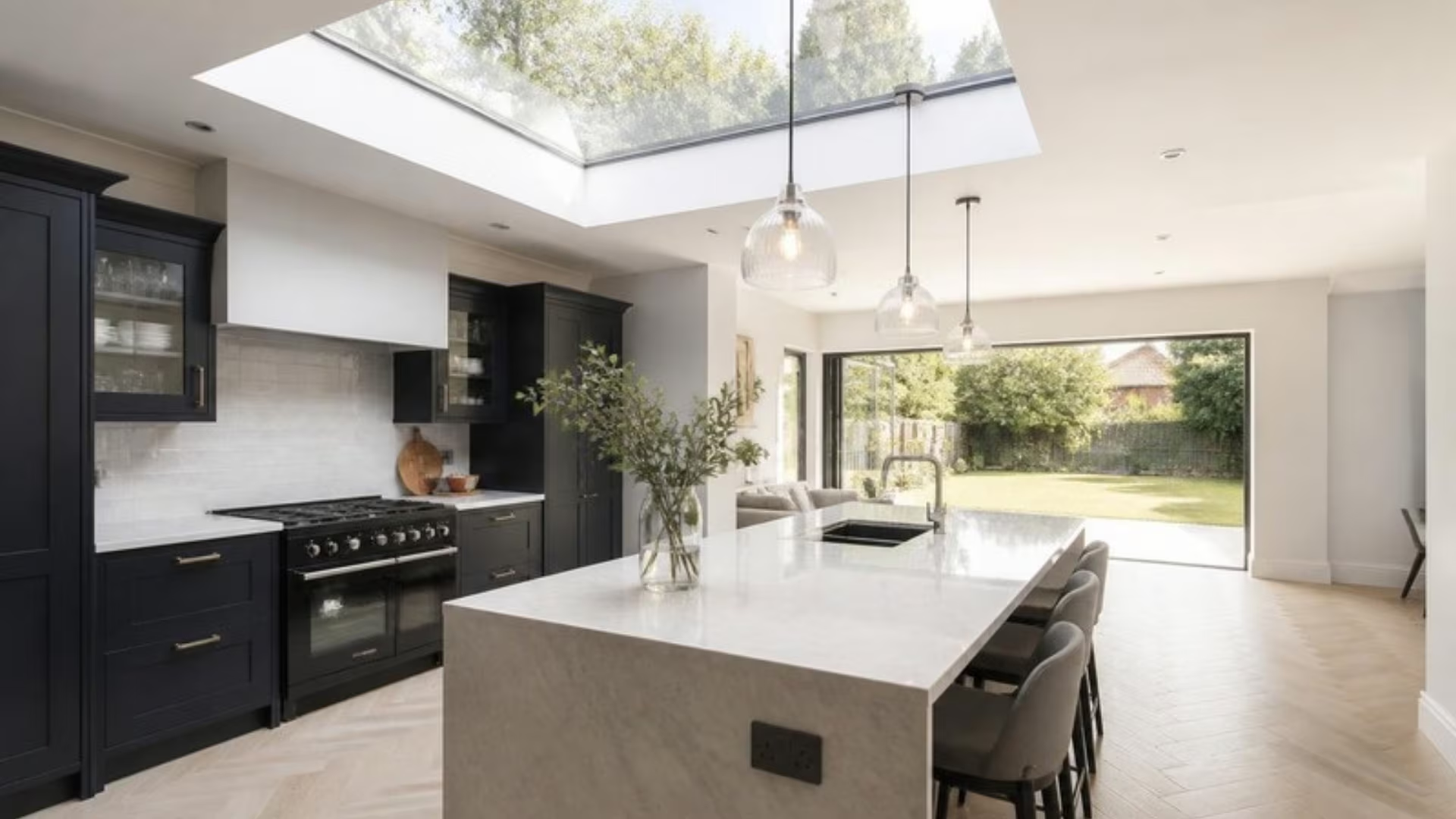
Rooflights for flat roofs
Fixed, opening and walk-on rooflights that pour daylight into extensions, kitchens and hallways.
What is a rooflight?
A rooflight is a window set into a roof to bring daylight straight down into the room below. On a flat roof it usually sits on an insulated upstand (a raised kerb) so rain runs away from the glass. Light from above is far stronger than light through a wall, so a rooflight can turn a dark middle room into the brightest part of the house.
Rooflights for flat roofs at a glance
- Types: Fixed, electric opening, hinged access and walk-on
- Glazing: Double or triple glazed units with a laminated inner pane
- Frame: Thermally broken aluminium, or frameless with a minimal edge
- Installation: On an insulated upstand on flat roofs
- Options: Solar control, self-cleaning coatings and rain-sensing vents
- Size: Made to measure for the roof opening
Types of rooflight
Fixed rooflights are the most common. They’re pure daylight, the slimmest frames and the best value.
Opening rooflights have an electric actuator that lifts the glass for ventilation. Most come with a rain sensor that closes them automatically when the weather turns.
Access rooflights are hinged hatches that let you out onto a flat roof for maintenance. They’re useful where there’s no other safe way up.
Walk-on rooflights sit flush with a terrace or floor and are glazed with thick laminated glass designed to be walked on. They suit basements and roof terraces.
Glass matters more overhead
Glass above your head is treated differently from glass in a wall. A rooflight’s inner pane should be laminated so that if it breaks, it holds together rather than falling into the room. On south-facing roofs, solar control glass keeps summer heat down. A self-cleaning coating on the outer pane helps rain wash the glass, which matters on a roof you’ll rarely get up to.
How we survey, supply and fit rooflights
- Survey. We check the roof build-up, the opening size and the fall, and whether an upstand is in place or needs building.
- Specification. We choose fixed or opening, the glass and the size with you, working with your builder if the roof is new.
- Made to measure. Each rooflight is made to the opening and glazed before delivery.
- Fitting. We bed and fix the rooflight to the upstand, seal it to the roof membrane and check it’s watertight.
- Handover. For opening rooflights, we test the actuator and rain sensor and show you the controls.
Planning and rooflights
Rooflights on a flat-roofed rear extension are normally part of the extension itself. Since July 2026, Irish planning rules also include an exemption for rooflights on the main house roof, within set limits. If your house is a protected structure or sits in an Architectural Conservation Area, check with the council before adding any rooflight.
Rooflight ideas
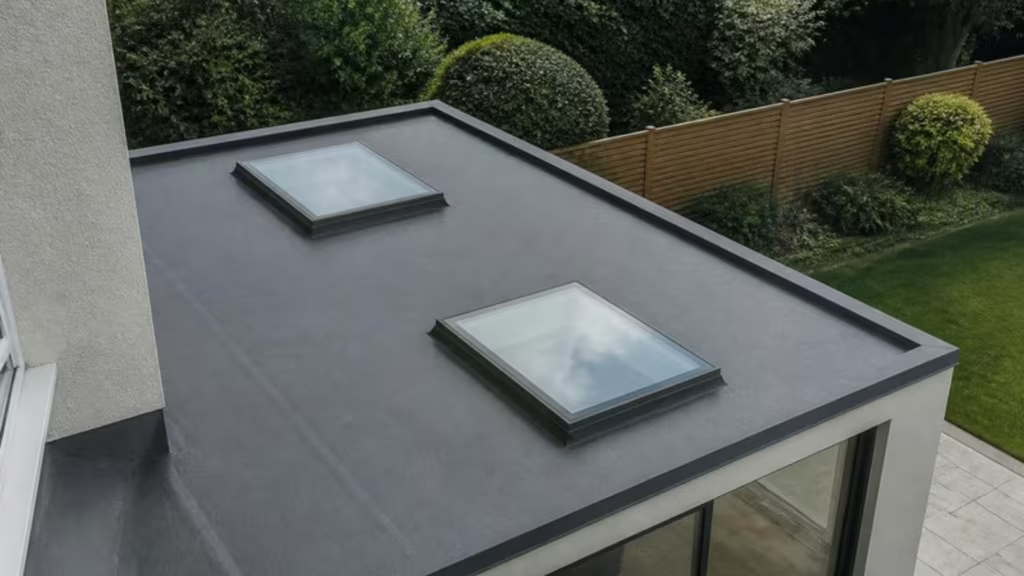
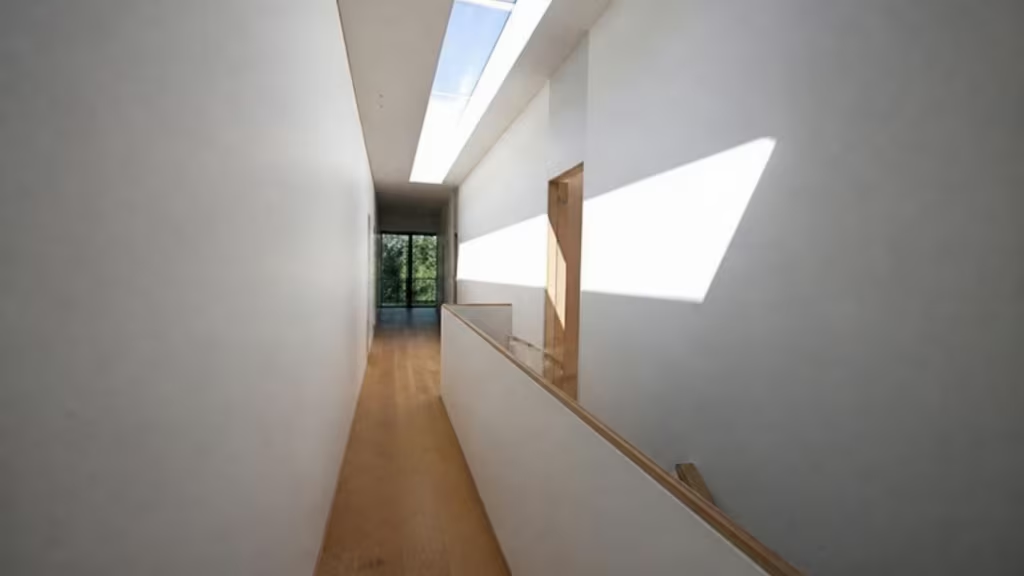
These are illustrations of design ideas, not photos of specific Brega Glazing jobs. See more in our ideas gallery.
Typical uses for rooflights
- Kitchen and living extensions with flat roofs
- Dark hallways, landings and bathrooms in the middle of the house
- Basements and lower ground floors, using walk-on glazing
- Roof access for maintaining flat roofs and solar panels
Rooflight FAQs
Do rooflights leak?
A correctly installed rooflight shouldn’t. Leaks almost always come from poor detailing where the rooflight meets the roof, not from the unit itself. That’s why the upstand and the seal to the roof membrane matter so much, and why we take care over both.
Will a rooflight make my room too hot?
It can on a south-facing roof without the right glass. Solar control glass cuts the heat coming through while keeping most of the daylight, and an opening rooflight lets warm air escape from the top of the room.
Do I need planning permission for a rooflight?
Rooflights on a flat-roofed rear extension normally go with the extension. Since July 2026, there’s also a specific exemption for rooflights on the main house roof, within limits. Protected structures and houses in Architectural Conservation Areas need permission, so check with your council if that applies.
Can a rooflight be opened for ventilation?
Yes. Electric opening rooflights lift on an actuator and usually include a rain sensor, so they close themselves if it starts raining while you’re out.
What glass should be in a rooflight?
A sealed double or triple glazed unit with a laminated inner pane, so broken glass stays in place. Add solar control on sunny elevations and a self-cleaning outer pane if the roof is hard to reach.