
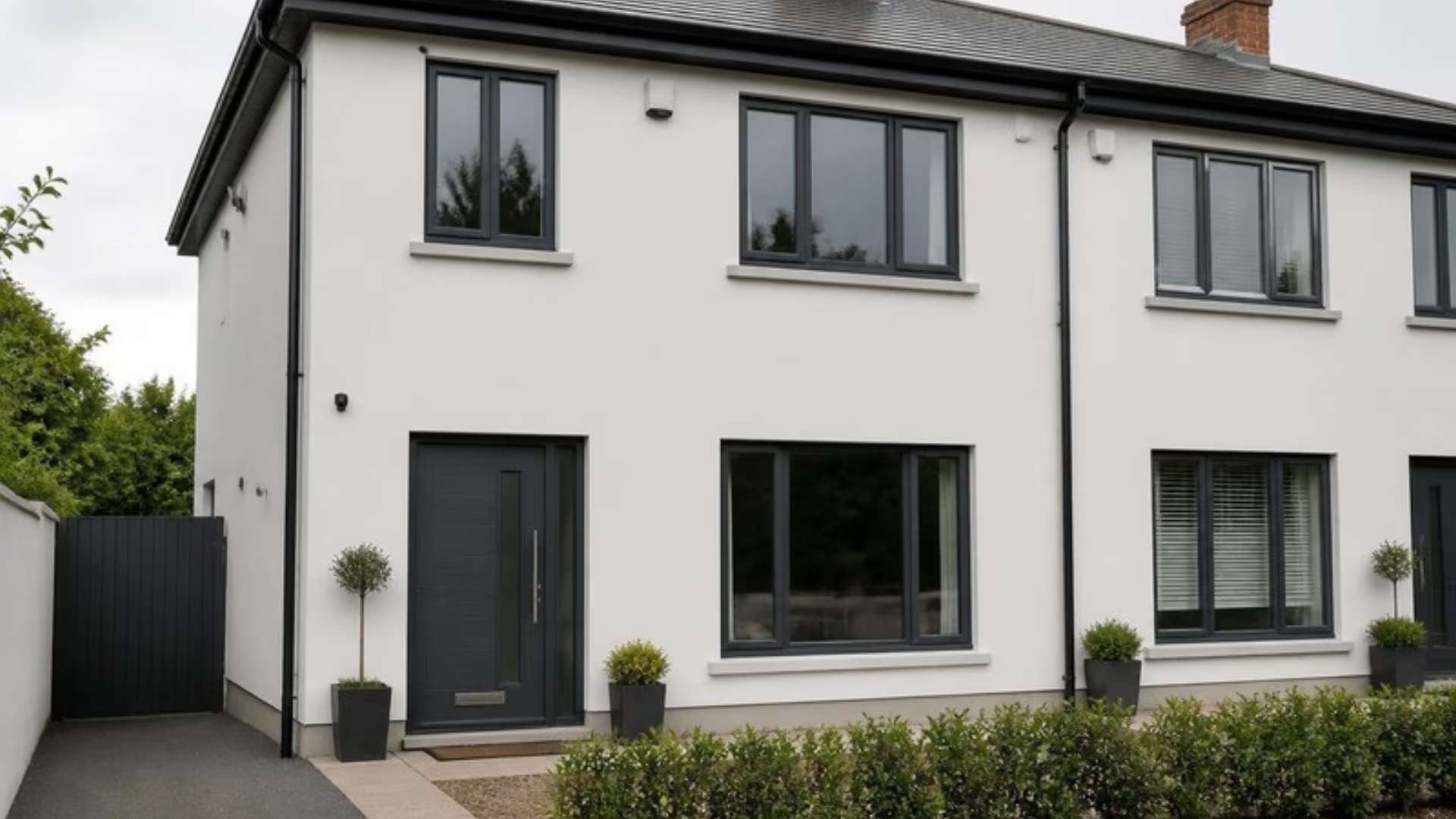
Windows & Doors
Replacement windows
uPVC and aluminium windows made to measure for every opening, glazed for the room they’re going into, and fitted by people who do this every week.
New windows, without the guesswork
People usually call us about windows for one of three reasons. The house is cold and draughty. The old frames have given up, with misted panes, sashes that won’t close properly or hinges that have seized. Or there’s a renovation or extension on the way and they want more light in the house. Whichever it is, the job starts the same way: we measure every opening, talk through how each room is used, and only then recommend a window.
Every window we supply is made to measure. Nothing is forced into an opening it wasn’t built for.
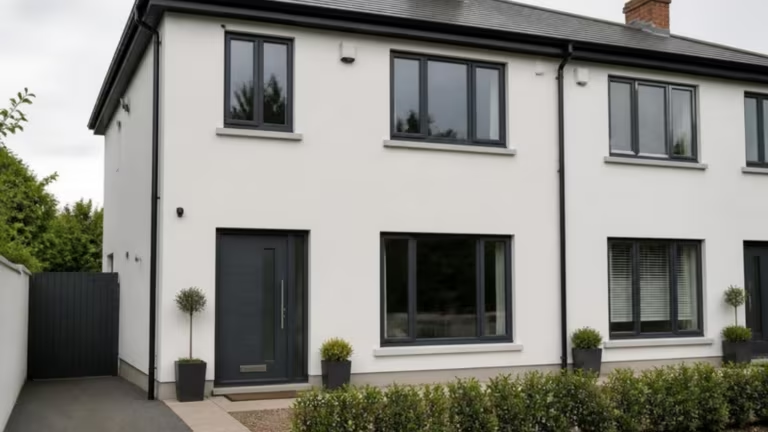
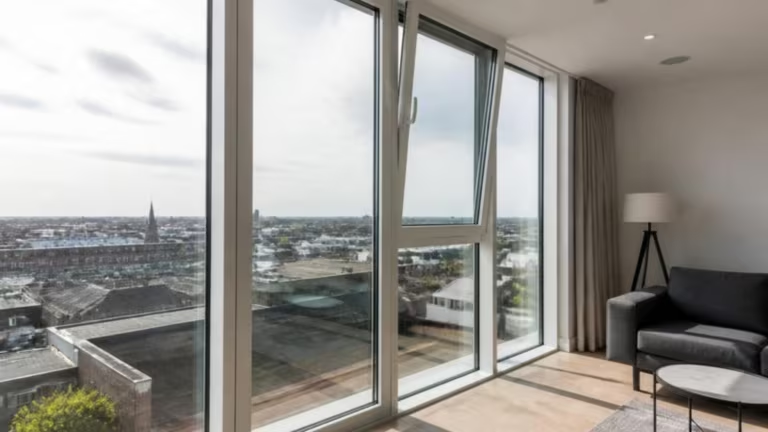
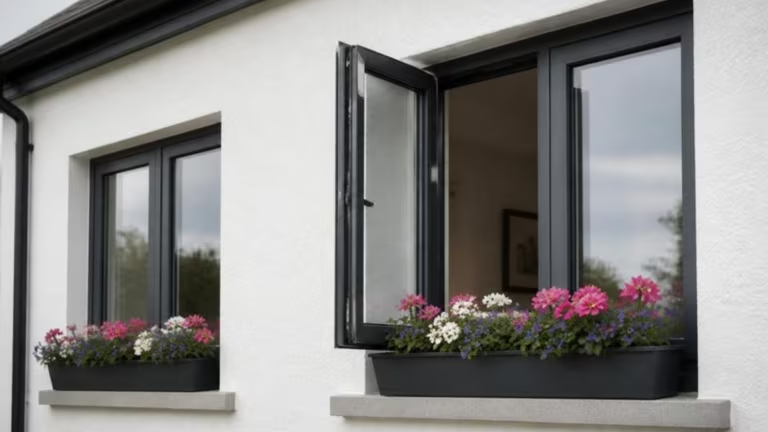
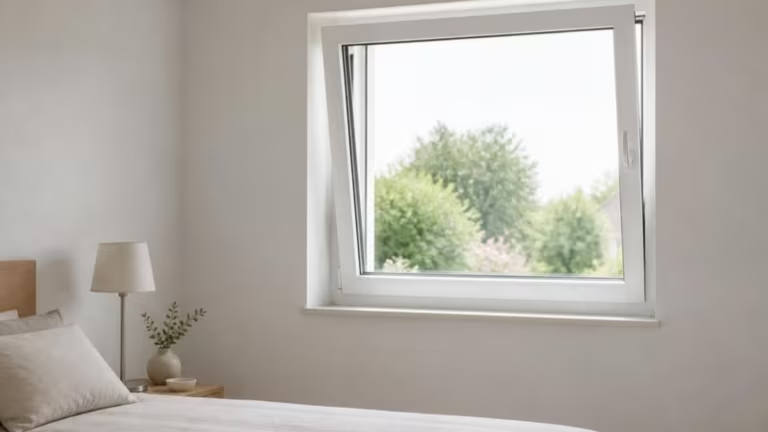
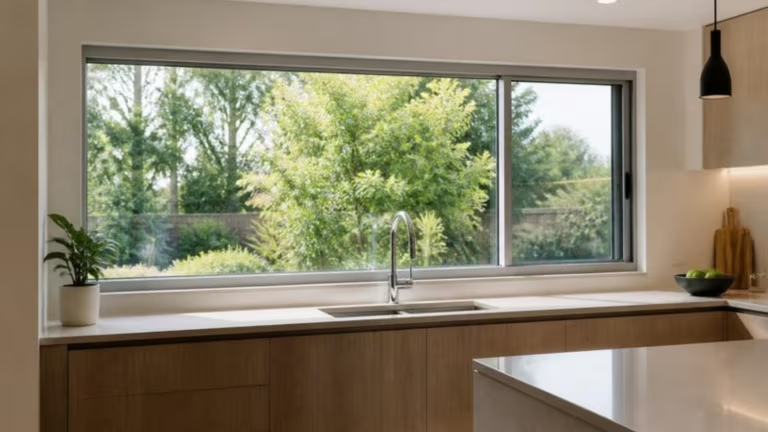
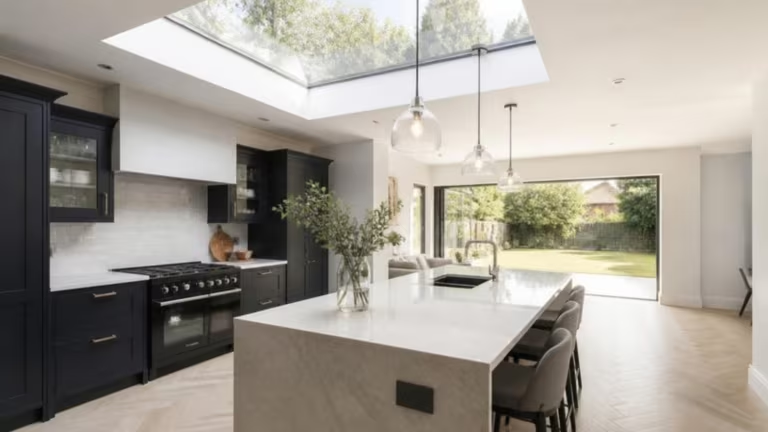
Which window suits which room?
There’s no single best window. There’s the right one for each opening, and a typical house ends up with a mix.
- Upstairs bedrooms: casement or tilt & turn, sized so at least one window gives a proper escape opening in a fire, with child-safe restrictors.
- Kitchens: if the window is over the sink and you can’t reach out, a tilt & turn (opens inwards) or a slider is far easier to live with than a casement.
- Living rooms: large fixed panes for the view, with narrower opening sashes at the sides for air.
- Bathrooms: obscure glass such as satin or frosted glass or patterned glass, plus a tilt or top-hung vent.
- Flat-roofed extensions: a rooflight will often do more for the room than another wall window.
Double or triple glazing?
For most Irish homes, a good double-glazed unit is the right answer. That means a low-e coating, an argon-filled cavity and a warm-edge spacer bar. Triple glazing earns its extra weight and cost on north-facing walls, on very exposed sites and in houses being taken close to passive standard.
Two other options are worth knowing about. If you live on a busy road, acoustic laminated glass on the outer pane makes a noticeable difference to noise. On big south or west-facing windows, solar control glass stops a room overheating on bright afternoons without darkening it much.
The SEAI windows and doors grant
Since early 2026, SEAI has offered a standalone grant towards new windows and external doors for homes built and occupied before 2011. At the time of writing the window grant is €1,500 for an apartment, €1,800 for a mid-terrace, €3,000 for a semi-detached or end-of-terrace house and €4,000 for a detached house. On top of that there’s €800 per external door, for up to two doors.
The main conditions are that the new windows reach a U-value of 1.4 W/m²K or better, the house is already reasonably well insulated (SEAI checks this with a BER), and the work is done by a contractor on SEAI’s register. Grant rules do change, so confirm the current terms on seai.ie before you place an order. Our plain-English guide to the grant walks through the steps.
Window options and accessories
The frame and glass do most of the work, but the small parts decide how a window looks and lives with you. These are the options we talk through at survey, for uPVC and aluminium windows alike.
- Sills. Aluminium or uPVC external sills sized to the depth of the wall, and internal window boards to finish the inside.
- Handles and locks. Lockable handles in white, black, silver or brushed finishes, with multi-point locking and security hinges.
- Trickle vents. Slim vents in the head of the frame. Ventilation guidance (TGD F) expects replacement windows not to leave a room worse ventilated than before, and airtight new windows usually need them.
- Restrictors. Opening limiters for upstairs and children’s rooms that release for cleaning and escape.
- Glazing bars. Georgian-style bars between the panes or bonded to both faces of the glass, for period houses.
- Insect screens. Fixed or roll-up fly screens for kitchens and bedrooms that are opened a lot.
- Shutters and blinds. Roller shutters or external blinds, with the box built in above the frame when you order new windows.
How a window job runs
- Survey. We measure every opening, check the reveals, sills and cavity, and note anything that affects the design, such as escape windows or tricky access.
- Quote. You get a written, itemised quote that lists the glass, colours and hardware for each window.
- Made to measure. Your windows are built to the surveyed sizes. We confirm a fitting date once they’re ready.
- Fitting. We replace one opening at a time, so the house is never left open. Every window is sealed, insulated around the frame and finished inside and out.
- Handover. We show you how the locks, restrictors and tilt settings work before we leave.
Replacement window FAQs
How long does it take to replace the windows in a house?
The fitting itself is usually quick. A typical three-bed semi-detached house takes a day or two, depending on the number of windows and how much making good the reveals need. Most of the waiting is in the gap between survey and fitting, while the windows are made to measure.
Do I need planning permission to replace my windows?
Usually not, as long as the new windows don’t materially change how the house looks from outside. Protected structures and houses in an Architectural Conservation Area are the exception. There, changing the style or material of windows can need permission, so check with your council first.
Can you replace just the glass instead of the whole window?
Often, yes. If the frames are sound and only the sealed unit has misted up or cracked, we can replace the glass on its own. See our glass replacement service.
What U-value should I ask for?
Ask for a whole-window U-value of 1.4 W/m²K or lower. That’s the threshold for the SEAI windows grant, and lower is better. Make sure the figure quoted is for the whole window, not just the centre of the glass, which always looks better on paper.
Which windows are best for an upstairs bedroom?
Pick a window that opens wide enough to escape through in a fire and that has restrictors so small children can’t open it fully. Side-hung casements and tilt & turn windows both work well. We size escape openings to the Building Regulations when we survey.