
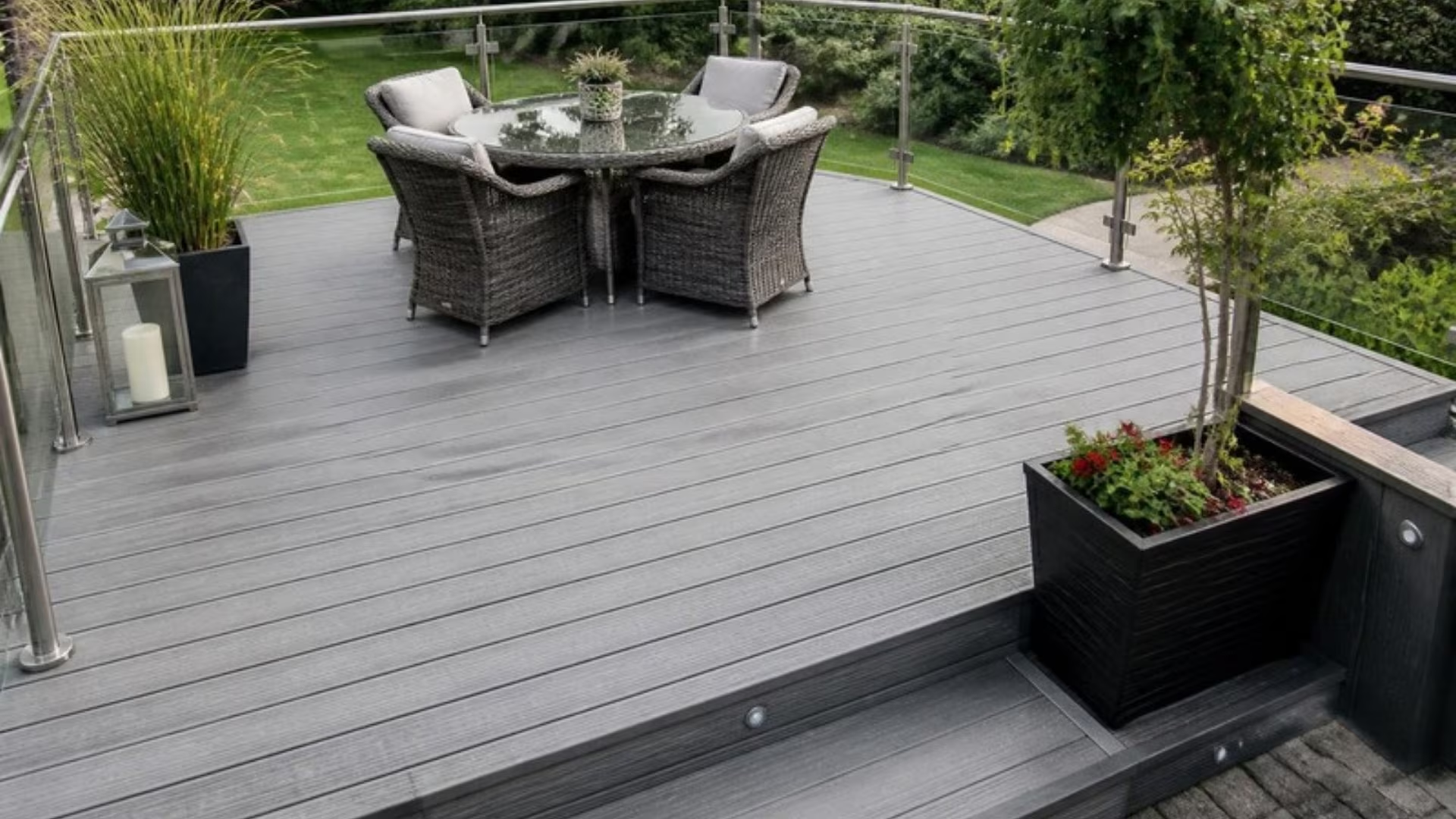
Aluminium balustrades
Powder-coated aluminium posts and rails with glass, bar or slat infill, for decks, balconies, terraces and external stairs.
What is an aluminium balustrade?
An aluminium balustrade is a guarding system made of powder-coated aluminium posts and a handrail, with an infill between the posts to stop people falling. The infill can be glass panels, vertical bars or horizontal slats. Balustrades are used wherever there’s a drop: raised decks, balconies, terraces, external stairs and landings. Aluminium won’t rust, doesn’t need painting and stays good-looking outdoors for many years, which makes it ideal for Irish weather.
Aluminium balustrades at a glance
- Posts and rails: Powder-coated aluminium, surface or side fixed
- Infill: Glass panels, vertical bars or horizontal slats
- Glass: Toughened or toughened laminated safety glass
- Heights: Built to Building Regulations guarding heights
- Finish: Any RAL colour
- Uses: Decks, balconies, terraces and external stairs
Guarding heights and gaps
A balustrade is safety equipment first, and the Building Regulations (Part K) set out how it must perform. In a typical home, guarding on stairs and landings is usually at least 900 mm high, and on balconies, raised decks and other external edges it’s usually at least 1100 mm. Where young children may be present, the infill shouldn’t have gaps a 100 mm sphere can pass through, and it shouldn’t be easy to climb. Horizontal slats that form a ladder are best avoided on balconies for that reason. The balustrade must also take the loads people put on it, which is why the posts, fixings and glass are specified together.
Glass, bars or slats?
Glass infill keeps the view and lets the light through. The glass is toughened or toughened laminated safety glass, cut and processed by us to fit between the posts.
Vertical bars are classic and affordable, and easy to space within the 100 mm rule.
Horizontal slats match slatted fencing and gates. They’re best used where climbing isn’t a concern, or with a design that prevents it.
For a fully frameless look, see our glass balustrades.
How we survey, supply and fit aluminium balustrades
- Survey. We measure the run, check what the posts will fix into (concrete, steel or timber), and confirm the heights the Regulations require.
- Design. We agree the infill, post spacing, fixing method and colour.
- Made to measure. Posts, rails and infill are cut to size, with glass processed to fit.
- Installation. We fix the posts securely, fit rails and infill, and check heights and gaps.
- Handover. We walk you through cleaning and periodic checks of the fixings.
Aluminium balustrade ideas
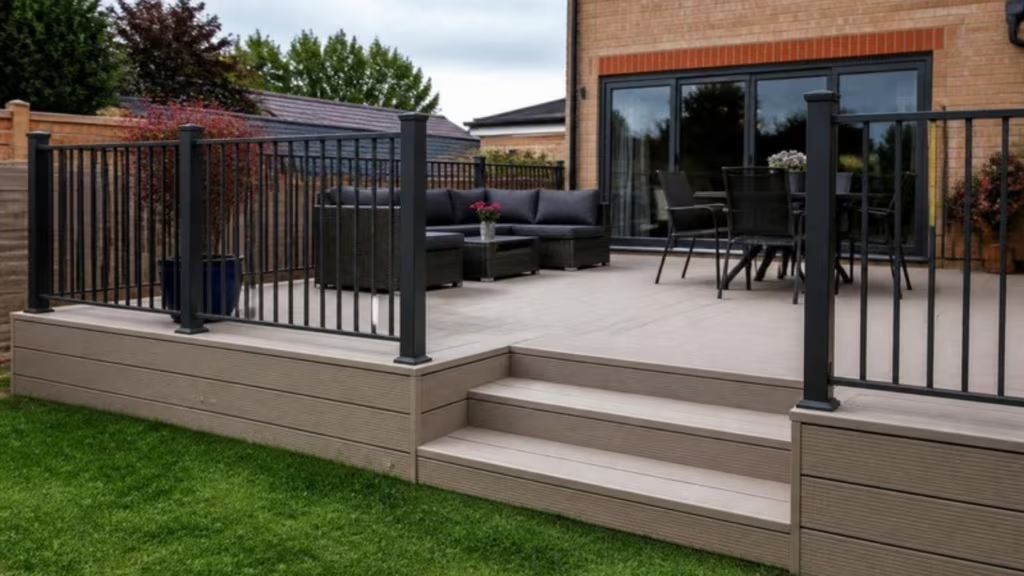
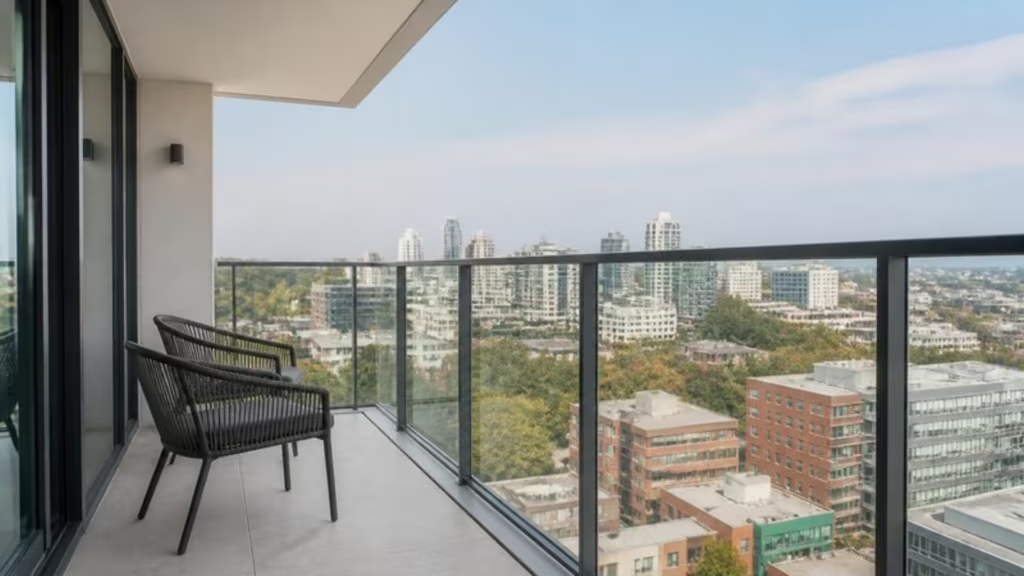
These are illustrations of design ideas, not photos of specific Brega Glazing jobs. See more in our ideas gallery.
Typical uses for aluminium balustrades
- Raised decks and terraces
- First-floor balconies
- External steps and stairs
- Roof terraces and walkways
More balustrades
Aluminium balustrade FAQs
How high does a balustrade need to be in Ireland?
In a typical home, guarding on stairs and landings is usually at least 900 mm high, and on balconies, raised decks and external edges at least 1100 mm. Check your particular case with your designer or builder, and we’ll build to the height the Regulations require.
What is the 100 mm rule for balustrades?
Where young children may use the space, guarding shouldn’t have any openings a 100 mm sphere can pass through. That stops small children slipping through or getting their heads stuck. It applies to the gaps between bars, slats and glass panels.
Can aluminium balustrades be used near the sea?
Yes. Choose a marine-grade pre-treatment under the powder coat, and wash the balustrade regularly to remove salt. Aluminium doesn’t rust, which is why it suits coastal sites so well.
Can a balustrade be fixed to a timber deck?
Yes, provided the deck’s structure is strong enough at the post positions. Posts are fixed to the deck’s frame, not just the boards, and sometimes the frame needs extra blocking. We check this at survey.