

Solar control glass
Solar control glass keeps rooms cooler and brighter by reflecting or absorbing the sun’s heat while letting daylight through. Ideal for conservatories, rooflights and sunny facades.
What is solar control glass?
Solar control glass has a microscopically thin metal oxide coating that reflects and absorbs part of the sun’s energy. It lets daylight in but blocks a large share of the heat, which helps stop rooms from overheating on sunny days.
The performance of solar control glass is measured by its g-value, the share of solar energy that passes through, and by its light transmission. Modern spectrally selective coatings keep the g-value low while letting most of the visible light through, so rooms stay bright without the greenhouse effect.
Solar control glass is almost always used as the outer pane of a double-glazed or triple-glazed unit, often combined with a low-emissivity coating that keeps heat inside in winter. Compared with tinted glass, it usually gives better heat control with less loss of daylight. The effect of solar gain on buildings is explained on Wikipedia.
Solar control glass specification
- Neutral, blue, grey and bronze appearances
- Low g-value with high light transmission
- Combined solar control and low-e coatings
- Toughened or laminated for safety
- Supplied in double or triple-glazed units
How we supply solar control glass
- Assess the space. Tell us the room, orientation and problem: heat, glare or fading.
- Select the coating. We suggest a solar control glass with the right balance of light and heat.
- Build the unit. The coated glass is toughened or laminated as needed and made into a sealed unit.
- Deliver. Units are delivered ready for your installer to fit.
Choosing solar control glass
South and west-facing glazing, conservatory roofs and large rooflights benefit most from solar control glass. North-facing windows usually do not need it, and keeping more solar gain there can help in winter.
If you want the glass to look as close to clear as possible, choose a neutral spectrally selective coating. Reflective blue or grey coatings give a stronger heat cut and a more mirrored appearance from outside.
Overhead solar control glass in roofs should have a laminated inner pane so it stays in place if broken.
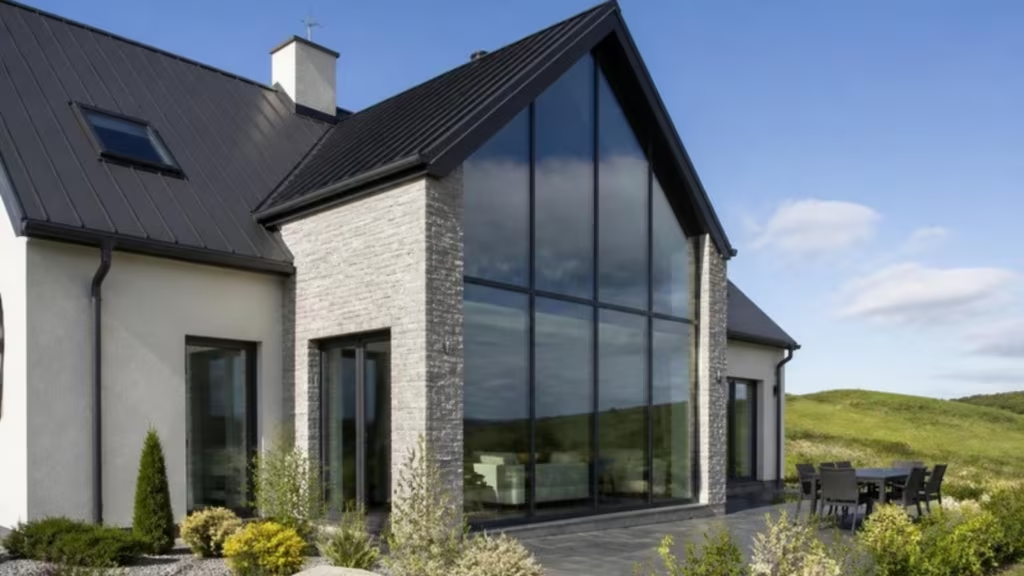
Typical uses for solar control glass
- Conservatory and orangery roofs
- Rooflights and lanterns
- South and west-facing windows
- Office and shop facades
- Glass extensions and sunrooms
Solar control glass FAQs
Does solar control glass make rooms darker?
Modern neutral coatings keep most of the daylight while cutting heat. Reflective versions are darker but give stronger heat control.
Is solar control glass the same as low-e glass?
No. Low-e glass mainly keeps heat in during winter, while solar control glass keeps the sun’s heat out. Many units combine both.
Can I add solar control glass to existing windows?
The coating is applied in the factory, so the sealed units need to be replaced. Films are an alternative but perform differently.
Does solar control glass reduce fading?
It reduces solar heat and some UV. For the most UV protection, combine it with a laminated inner pane.
Is solar control glass worth it in Ireland?
For conservatories, rooflights and large south or west-facing glass, yes. It makes these rooms much more comfortable on sunny days.