
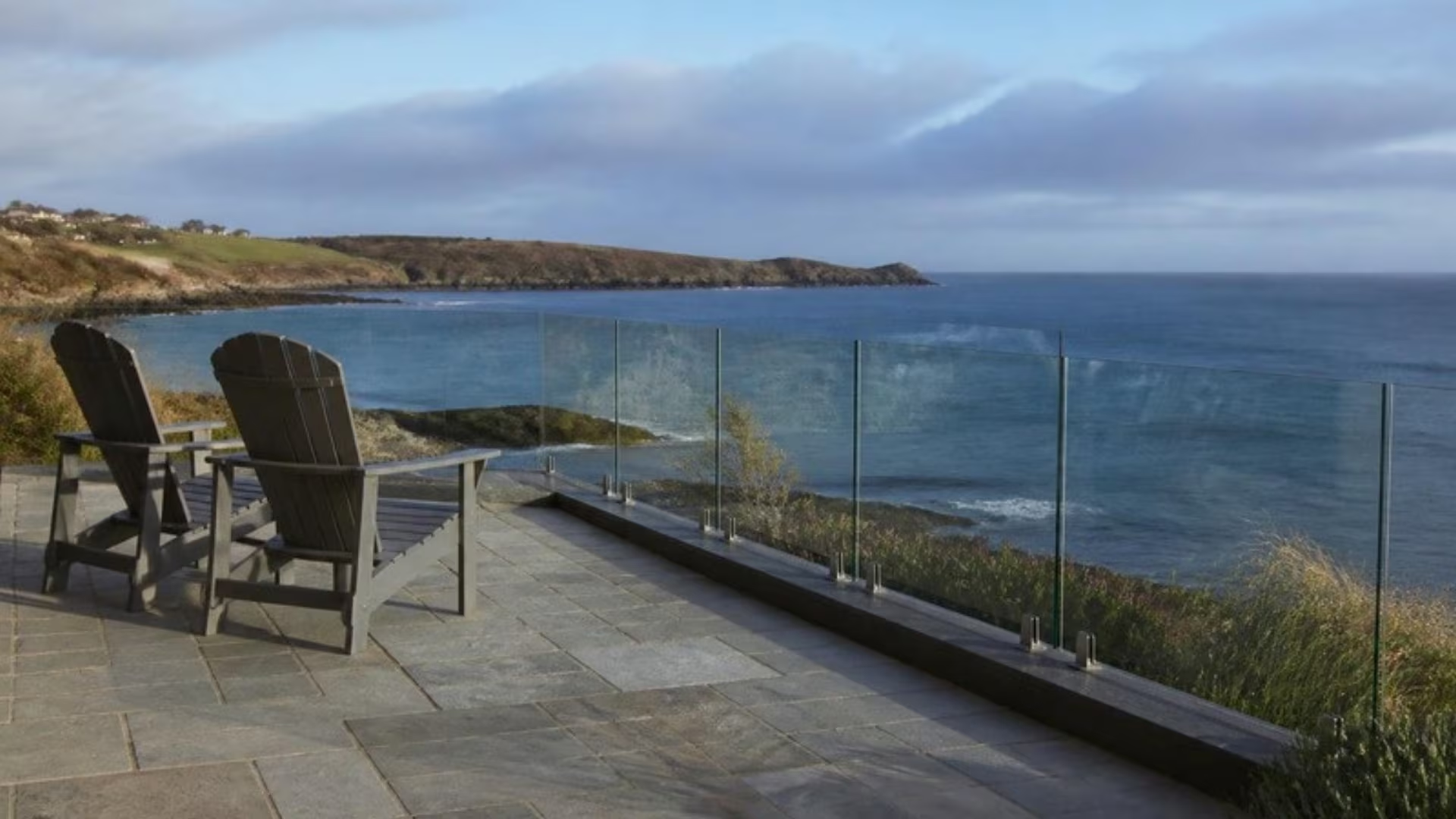
Glass fencing & garden screens
Toughened glass panels that stop the wind on a patio or deck and keep the view you moved there for.
What is glass fencing?
Glass fencing is a run of toughened safety glass panels held in slim posts, ground-fixed spigots or a continuous base channel. It’s used where you want shelter or a boundary without losing the view. Patios, decks and coastal gardens are the classic places: the glass stops the wind but leaves the sea, the hills or the garden in full sight.
Glass fencing & garden screens at a glance
- Glass: Toughened or toughened laminated safety glass, polished edges
- Fixing: Posts, ground spigots or a continuous base channel
- Height: Made to measure. Windbreaks are often 1.0–1.8 m
- Finish: Stainless or powder-coated fittings
- Options: Clear, low-iron or satin glass. Visibility markings
- Matching: Glass gates and pedestrian gates
Why glass?
Shelter without a wall. A glass screen cuts the wind across a patio dramatically, so you can sit out on days you otherwise couldn’t.
The view stays. In coastal and rural gardens, the view is the point. Glass keeps it.
Light stays too. Small gardens and patios don’t lose sunlight the way they would behind a solid fence.
We make the glass. We cut, polish and toughen the panels ourselves, so each one is made for its exact position, including raked panels on slopes.
How we survey, supply and fit glass fencing
- Survey. We measure the run, check what we’re fixing into (ground, slab, wall or deck) and assess the exposure.
- Design. We choose the fixing system, glass thickness and height for the wind and use.
- Made to measure. Panels are cut, edged and toughened to size.
- Installation. Posts, spigots or channel are fixed and levelled, the glass is set and aligned, and the gaps are kept even.
- Handover. We show you how to clean the glass and check the fixings.
Choosing glass fencing
Fixing system. A continuous base channel gives the cleanest frameless look. Spigots are minimal and suit decks. Posts are the most economical.
Visibility. Clear glass can be hard to see, for people and birds alike. A subtle etched band or dots helps.
Coastal sites. Choose high-grade stainless or powder-coated fittings, and rinse salt off the glass and fittings regularly.
Guarding. If the glass is protecting a drop from a deck or terrace, it’s a balustrade, and Building Regulations heights and loads apply.
Glass fencing ideas
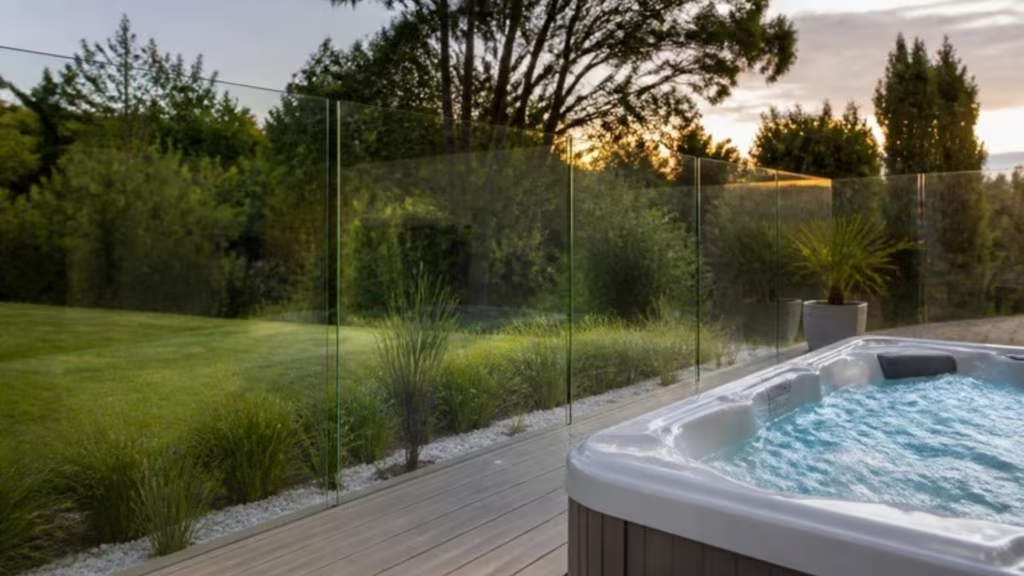
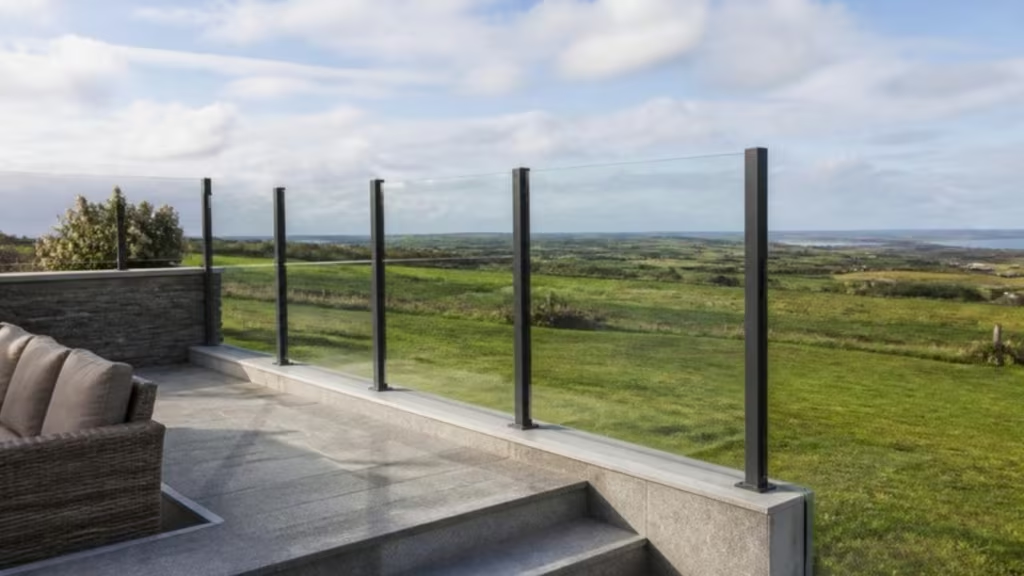
These are illustrations of design ideas, not photos of specific Brega Glazing jobs. See more in our ideas gallery.
Typical uses for glass fencing
- Windbreaks around patios and decks
- Coastal gardens with a view to keep
- Screens around hot tubs and seating areas
- Boundaries between garden levels
More fencing
Glass fencing FAQs
Is glass fencing strong enough for wind?
Yes, when the glass thickness and fixing system are chosen for the height and exposure. Toughened glass is several times stronger than ordinary glass, and on very exposed sites laminated toughened glass adds extra security.
How do you clean glass fencing?
With water, a little washing-up liquid and a squeegee, as you would windows. On the coast, rinse salt spray off regularly to keep the glass and fittings looking good.
Is glass fencing the same as a glass balustrade?
Not quite. Glass fencing is a screen or boundary. A balustrade guards a drop, such as a deck, stairs or balcony, and has to meet Building Regulations heights and loads. We make both.
Do birds fly into glass fencing?
They can, as with any clear glass. A subtle etched pattern, dots or a frosted band makes the glass visible to birds without spoiling the view.