
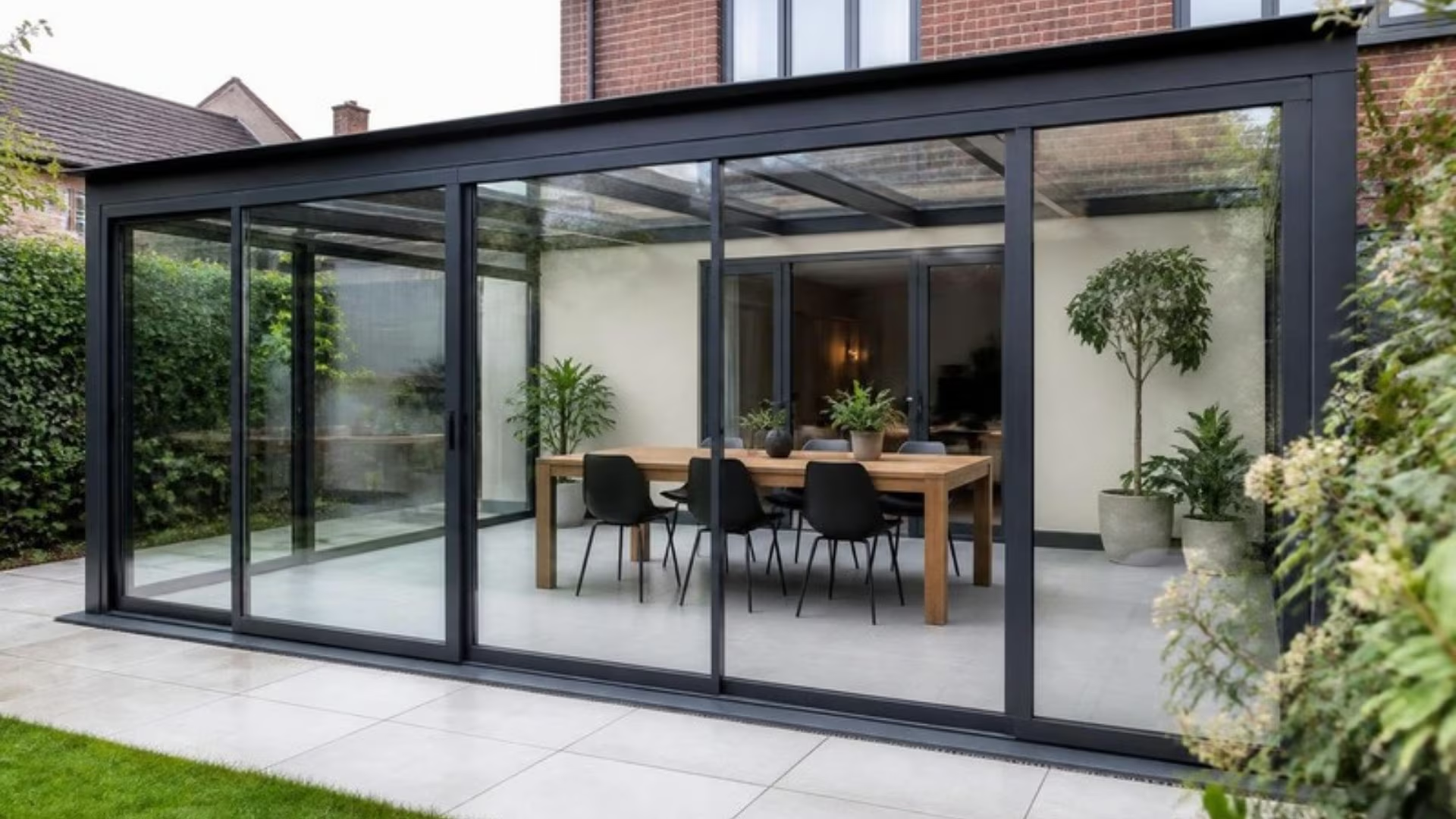
Glass rooms
A glass roof, glass walls and doors from the house. A light-filled room for the garden that you can use well beyond summer.
What is a glass room?
A glass room is a fully enclosed space fixed to the back of the house, with a glass roof and glass walls on every open side. It’s built on a veranda structure, closed in with framed or frameless sliding glass, and usually opens from the kitchen or living room through existing or new doors. Think of it as the bright, sheltered middle ground between a veranda and a full extension.
Glass rooms at a glance
- Roof: Laminated safety glass, with solar control options
- Walls: Framed or frameless sliding glass, plus fixed panels
- Frame: Powder-coated aluminium
- Floor: Existing patio, or a new level base
- Comfort: Infrared heating, LED lighting and roof shading
- Planning: Usually assessed as an extension
Glass room, conservatory or extension?
A glass room is quick to build and full of light. It’s comfortable for much of the year with a heater, but it isn’t built to the same insulation standards as the house.
A conservatory is usually built more like part of the house, with a dwarf wall, a heated floor and an insulated or glazed roof.
An extension is a full room: insulated walls, roof and floor, built to the Building Regulations for habitable space, with heating that holds through winter.
If you want a beautiful, bright room for dining and relaxing from spring to autumn, and on bright winter days, a glass room delivers it for much less disruption than building work. If you want a room you’ll sit in every January evening, talk to an architect about an extension.
Keeping a glass room comfortable
Summer heat. Use solar control glass in the roof, plan sliding sections on two sides for cross-ventilation, and consider shading for south-facing rooms.
Cooler evenings. Infrared heaters give instant warmth. Double-glazed framed walls hold heat better than frameless glass.
Condensation. Any enclosed glass space can mist up on cold mornings. Ventilation is the cure.
Planning permission for glass rooms
A glass room attached to the back of the house is normally treated as a rear extension. Since 27 July 2026, rear extensions can be up to 45 m² in total, counting any previous extensions, without planning permission. That’s subject to conditions: at least 25 m² of garden must remain, there are height limits tied to the house, and ground-floor windows must be at least 1 metre from the boundary they face. Our planning guide sets out the rules. Building Regulations still apply to how it’s built.
How we survey, supply and fit glass rooms
- Survey. We check the wall, the base, drainage, boundaries and how the room connects to the house.
- Design. We agree the size, roof glass, wall system, doors, heating and lighting.
- Made to measure. The structure is made to size, with the laminated roof glass processed to fit.
- Installation. We build the frame, glaze the roof, fit the walls and doors, and connect drainage. A registered electrician handles lighting and heating.
- Handover. We walk you through ventilation, cleaning and care.
Glass room ideas
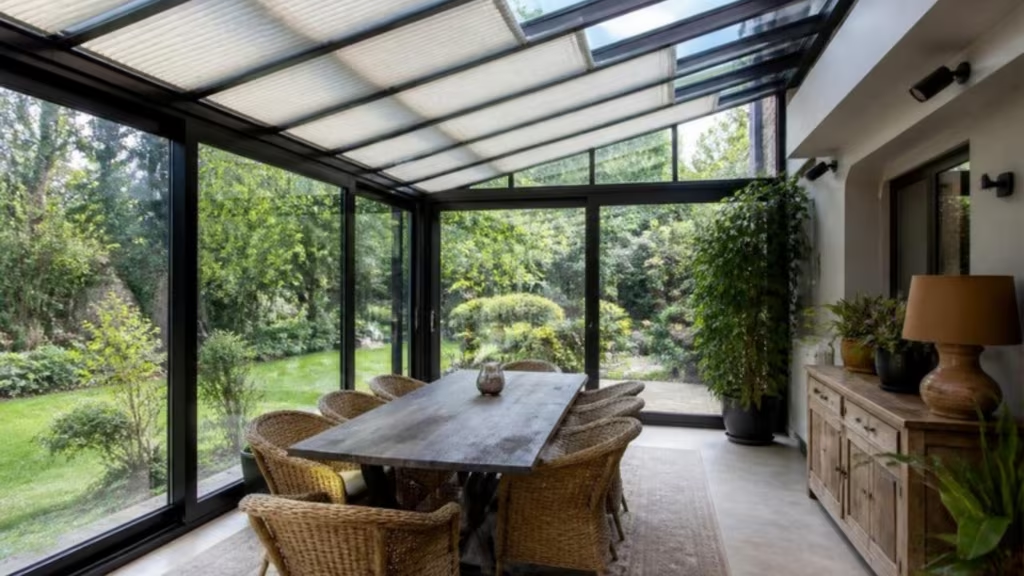
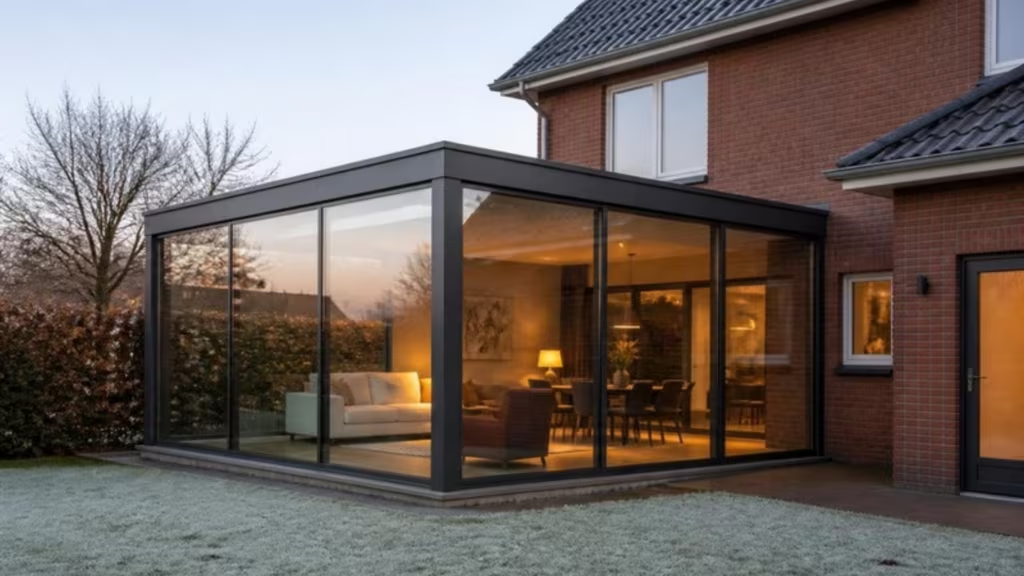
These are illustrations of design ideas, not photos of specific Brega Glazing jobs. See more in our ideas gallery.
Typical uses for glass rooms
- A dining room in the garden, off the kitchen
- A bright reading or relaxing space
- A sheltered play area for children
- A winter garden for plants
More verandas
Glass room FAQs
Do I need planning permission for a glass room?
A glass room fixed to the back of the house is usually treated as an extension. Since July 2026, rear extensions up to 45 m² (including earlier extensions) can be exempt, as long as 25 m² of garden remains and the height and boundary-distance rules are met. Check with your council if you’re near the limits.
Can a glass room be used in winter?
On bright or mild days, yes, especially with infrared heating and framed double-glazed walls. A glass room isn’t insulated like a full extension, though, so it won’t stay warm on cold winter nights.
Does a glass room get too hot in summer?
It can on bright days without the right glass. Solar control glass in the roof, shading, and sliding sections on two sides for cross-ventilation keep it comfortable.
How is a glass room different from a conservatory?
A glass room is a lighter structure, an enclosed veranda, built quickly with less building work. A conservatory is normally built more like part of the house, with a dwarf wall, foundations and heating, and costs more.