
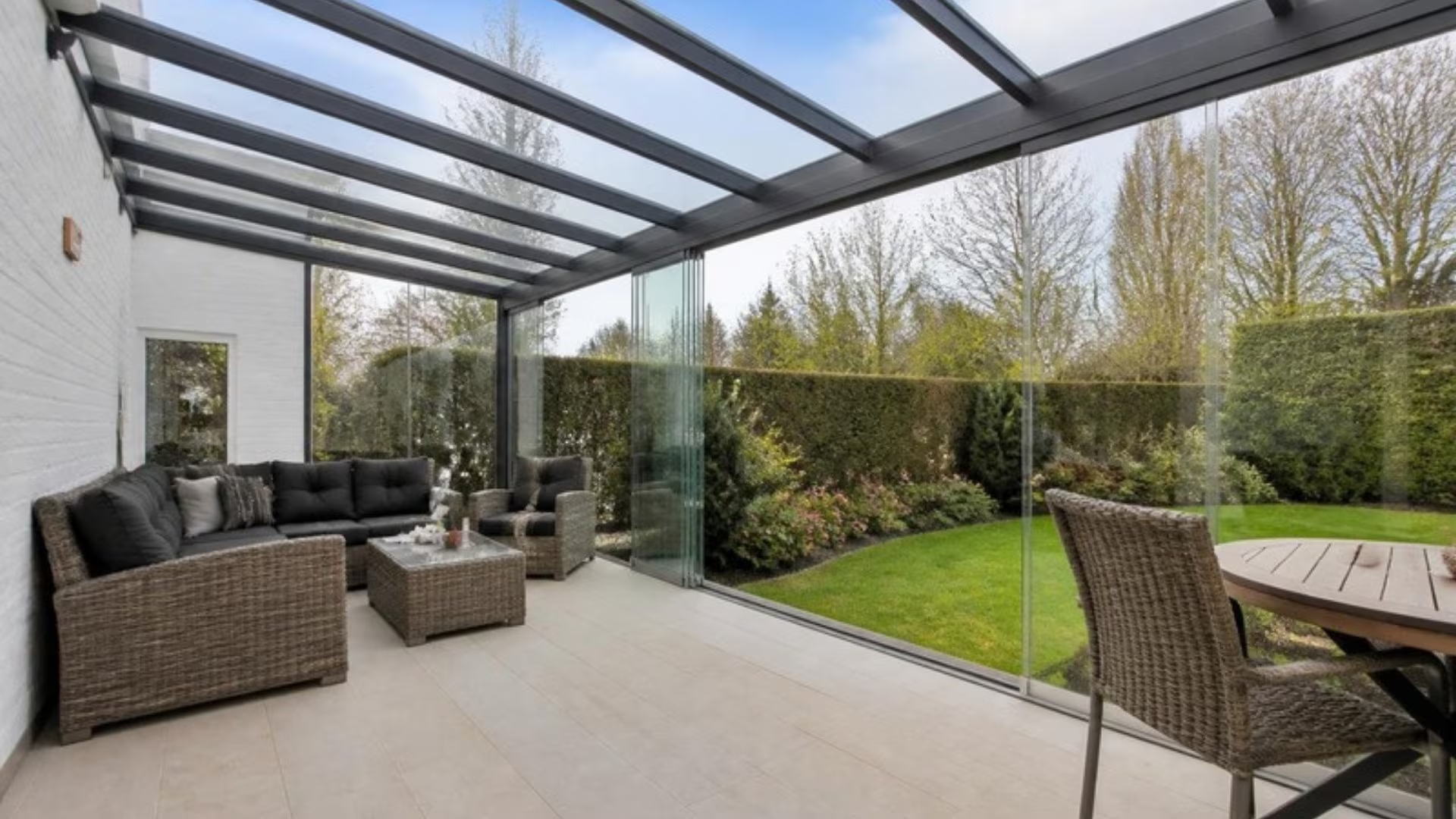
Frameless glass verandas
Frameless sliding glass walls under a veranda roof. Close them against the wind, or stack them away and keep the view.
What is a frameless veranda?
A frameless veranda is a veranda whose open sides are closed with frameless sliding glass walls. These are panels of thick toughened safety glass with no vertical frames, running between slim tracks at the top and bottom. Slide the panels across and they block wind and rain. Push them to the side and they stack neatly out of the way. Because there are no frames between the panes, the view out stays almost completely clear.
Frameless glass verandas at a glance
- Roof: Laminated glass or polycarbonate on an aluminium frame
- Side glass: Toughened safety glass with polished edges
- Tracks: Slim aluminium top and bottom tracks, in multiple lanes
- Opening: Panels slide and stack to one or both sides
- Seals: Brush seals between panels. Not airtight
- Finish: Tracks powder coated to match the frame
What frameless glass does well, and what it doesn’t
Does well: a clear, almost invisible enclosure. It keeps wind off the table and most rain out, opens fully in good weather, and looks as minimal as glass gets.
Doesn’t do: seal like a door. There are small gaps between panels so they can slide past each other, so a frameless veranda is a sheltered space, not a sealed room. If you want to keep heat in or leave the space locked, look at framed verandas.
How we survey, supply and fit frameless verandas
- Survey. We measure each opening and check the floor. Frameless glass needs a level base to run smoothly.
- Design. We agree the number of panels, which way they stack, and the glass finish.
- Made to measure. We cut, edge and toughen the glass panels ourselves to the exact sizes.
- Installation. We fix the tracks level and true, hang the panels, and adjust each one to run and stack smoothly.
- Handover. We show you how to open, stack and clean the panels.
Choosing a frameless veranda
Stacking side. Panels stack at the end of the run. Choose the side where they’ll be least in the way.
Glass. Clear glass keeps the view. A satin or patterned panel on the side facing the neighbours adds privacy.
Safety. Large clear panes need to be visible. A discreet frosted band or dots stops people walking into them, which is especially important with children around.
Frameless veranda ideas
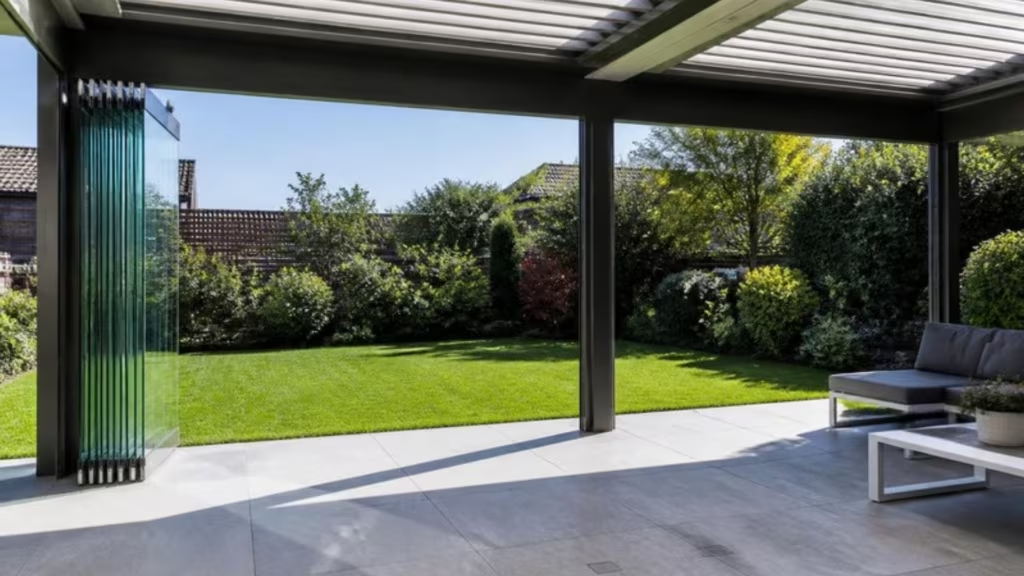
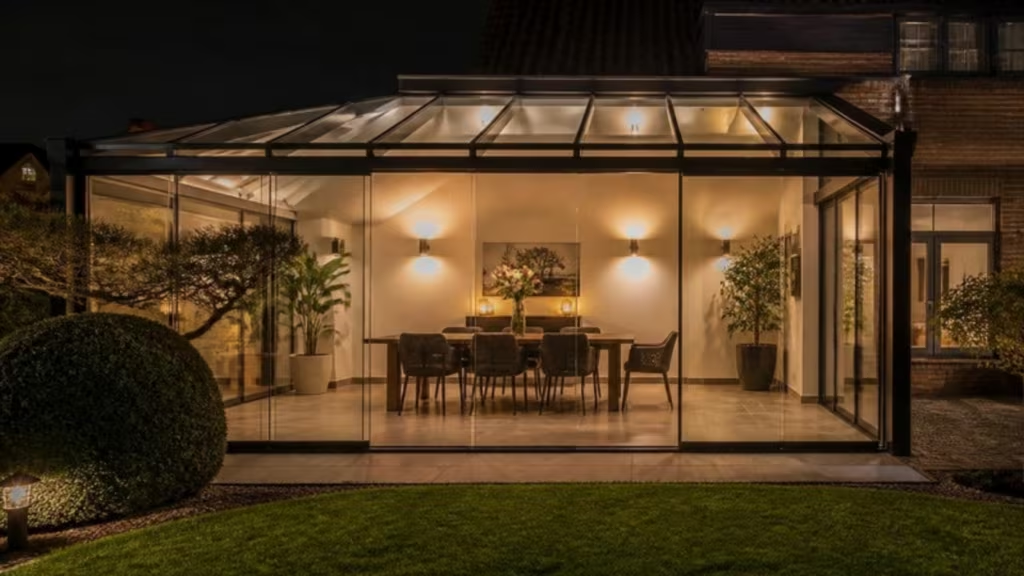
These are illustrations of design ideas, not photos of specific Brega Glazing jobs. See more in our ideas gallery.
Typical uses for frameless verandas
- Dining areas that need shelter from the wind
- Patios with a view worth keeping
- Coastal gardens that catch a sea breeze
- Hospitality terraces that want shelter without walls
More verandas
Frameless veranda FAQs
Are frameless glass walls watertight?
They keep out most wind and rain but aren’t fully watertight. There are small gaps between panels so they can slide. That’s normal for frameless systems. For a sealed, lockable space, choose framed sliding glass.
How thick is the glass in frameless sliding walls?
Frameless sliding panels use thick toughened safety glass with polished edges. The exact thickness depends on the system and the panel height, and we’ll confirm it at survey.
Can frameless glass panels be locked?
Some systems include a lock on the end panel, but a frameless veranda isn’t designed as a secure enclosure. If security matters, framed sliding doors are the better choice.
How do you clean frameless glass?
Clean them as you would windows, with water, a little washing-up liquid and a squeegee. Keep the bottom track free of grit so the panels glide easily.