
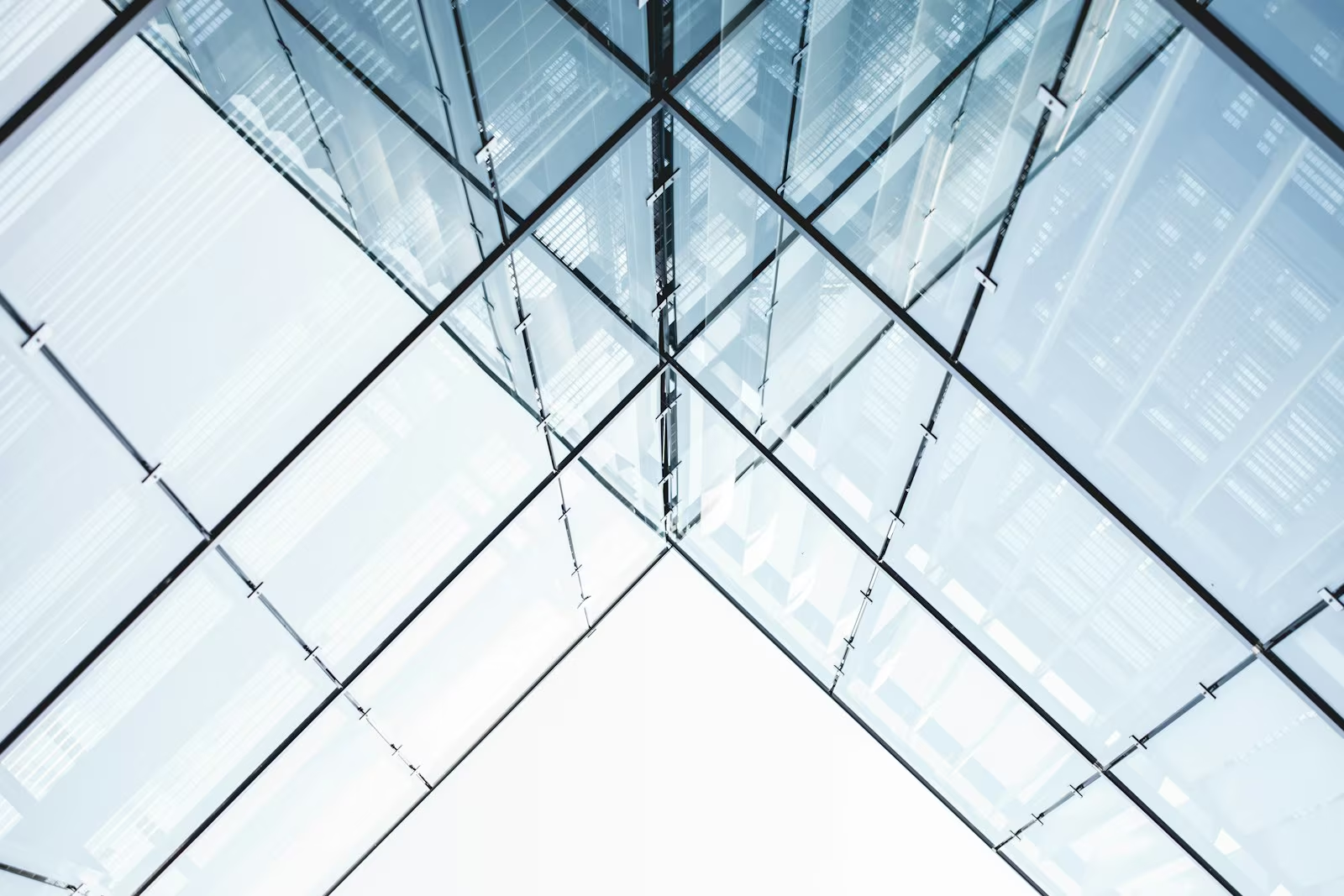
Low-iron glass
Low-iron glass is extra-clear glass with the green tint removed, giving true colours and a crisp, bright finish for splashbacks, showers, shelves and display glazing.
What is low-iron glass?
Low-iron glass is made from raw materials with much less iron oxide than standard glass. Iron is what gives ordinary glass its green edge, so removing it produces a glass that is noticeably clearer and more neutral in colour, especially at thicker sizes.
Low-iron glass lets more light through than standard clear float glass and shows colours behind or beneath it accurately. That is why designers choose it for colour-backed splashbacks, frameless showers, glass balustrades, shop displays and anywhere the edges will be visible.
Well-known brands include Pilkington Optiwhite, Saint-Gobain Diamant and AGC Planibel Clearvision. All of them can be processed like ordinary glass, so low-iron glass is available cut to size, toughened, laminated or as part of a double-glazed unit.
Low-iron glass specification
- Thicknesses from 4 to 19 mm
- Toughened, laminated or annealed
- Higher light transmission than standard float
- Polished, bevelled and mitred edges
- Suitable for back-painting and digital print
How we supply low-iron glass
- Confirm the look. We check whether the edges will be seen and whether the glass will be painted, so we can confirm low-iron glass is worth it for you.
- Cut and polish. Low-iron sheets are cut and the visible edges polished to a clear finish.
- Process. Holes and cut-outs are added, then the glass is toughened or laminated if required.
- Protect and deliver. Panels are wrapped to protect the polished edges in transit.
When is low-iron glass worth it?
Low-iron glass costs more than standard glass, so it is worth choosing where the difference shows: white or pale painted glass, thick shelves and table tops with exposed edges, frameless glass where you look through several panes, and displays where colour accuracy matters.
For a window, a framed door or an obscure bathroom pane, standard glass is usually fine. If you are unsure, ask us to compare low-iron glass and standard glass side by side for your project. You can also learn more about how iron affects glass colour.
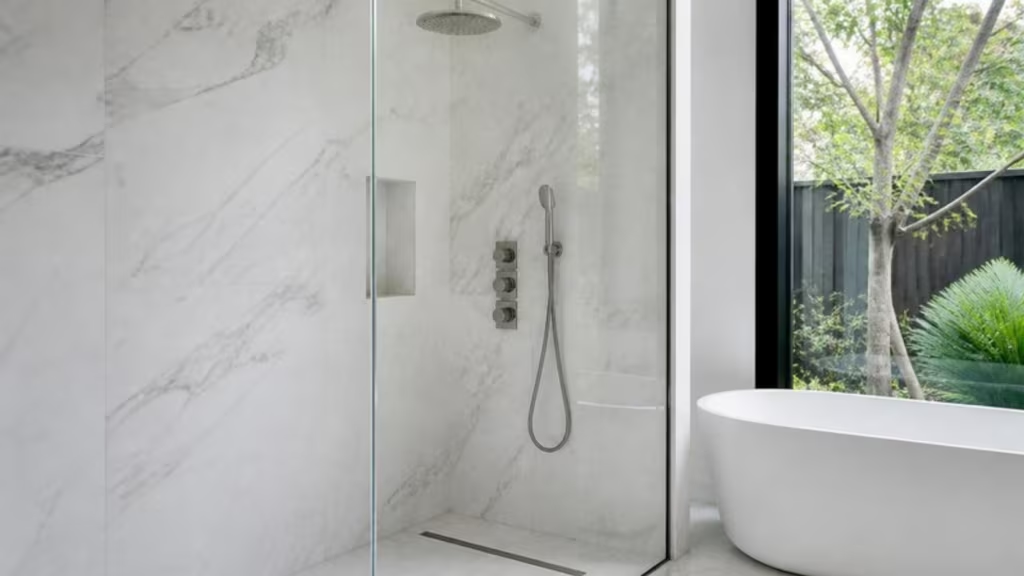
Typical uses for low-iron glass
- White and pastel colour-backed splashbacks
- Frameless shower enclosures
- Glass balustrades with visible edges
- Display cabinets and museum cases
- Low-iron mirrors
Low-iron glass FAQs
How can I tell low-iron glass from standard glass?
Look at the edge. Standard glass shows a clear green tint, while low-iron glass looks almost colourless or very slightly blue.
Is low-iron glass stronger?
No. Strength depends on thickness and whether the glass is toughened or laminated, not on the iron content.
Do I need low-iron glass for a splashback?
For white, cream and other pale colours, yes, otherwise the colour will look greenish. For dark colours, standard glass is usually fine.
Can low-iron glass be toughened?
Yes. Low-iron glass can be toughened, laminated, painted and made into double-glazed units in the same way as standard glass.