
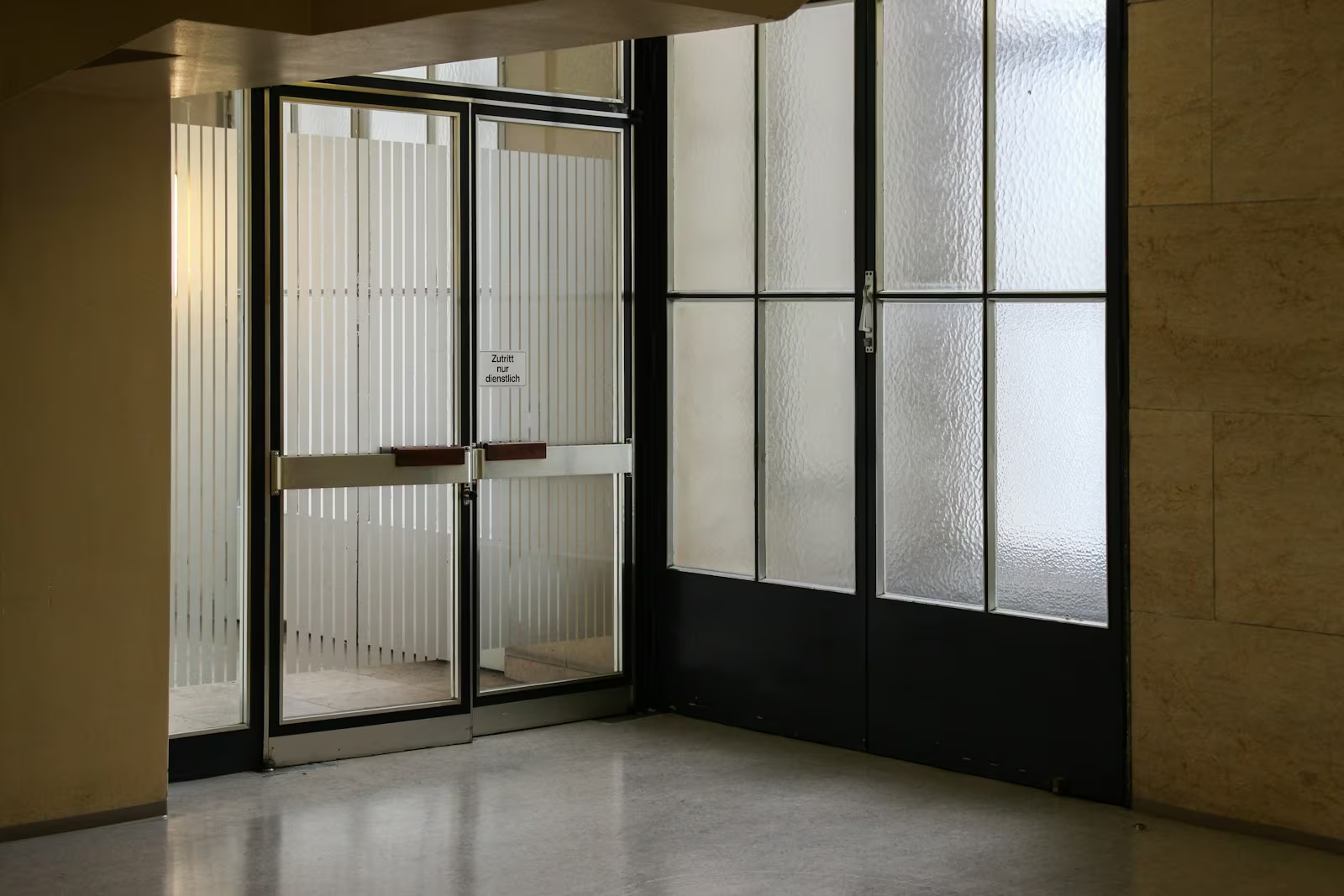
Fire-resistant glass
Fire-resistant glass holds back flames and smoke, and in insulating grades heat, for a rated time. Supplied to order for doors, screens and partitions as part of a tested system.
What is fire-resistant glass?
Fire-resistant glass is designed to stay in place during a fire for a specified time, stopping flames and smoke from spreading to escape routes and other parts of a building. Ordinary glass, and even toughened glass, will crack and fall out quickly in a fire.
Fire-resistant glass is classified by what it can do and for how long. Integrity glass (E) stops flames and smoke, for example E30 for 30 minutes. Insulating glass (EI) also limits the heat that passes through, so the non-fire side stays cool enough to protect people nearby, for example EI30 or EI60. These ratings come from fire tests under EN 13501-2.
A fire rating always belongs to a complete tested system: the glass, frame, glazing beads, seals and fixings together. That is why fire-resistant glass is supplied to order to match your door or screen manufacturer’s tested system. The principles of fire-resistance ratings are summarised on Wikipedia.
Fire-resistant glass specification
- Integrity (E) and insulating (EI) grades
- Typical ratings 30 and 60 minutes
- Clear, laminated safety options available
- Supplied to your system’s tested sizes
- Classification to EN 13501-2
How we supply fire-resistant glass
- Share the specification. Send the required rating, the frame system and the glazing schedule from your architect or fire engineer.
- Confirm the system. We check the glass type and maximum sizes allowed by the tested system.
- Order to size. Fire-resistant glass is made to exact size and cannot be cut on site.
- Deliver labelled. Each pane arrives marked with its classification for your installer and inspector.
Choosing fire-resistant glass
Start with the rating your fire strategy calls for. Integrity-only fire-resistant glass is suitable where people will not be close to the glass during a fire. Where the glass sits beside an escape route or must protect people from radiant heat, an insulating grade is usually required.
Fire-resistant glass in doors and low-level screens must also meet impact safety requirements, so many products combine fire performance with laminated safety glass.
Because ratings depend on the whole assembly, always fit fire-resistant glass in the frame and with the seals it was tested with. We can work with your joiner or fabricator to make sure the glass matches their system.
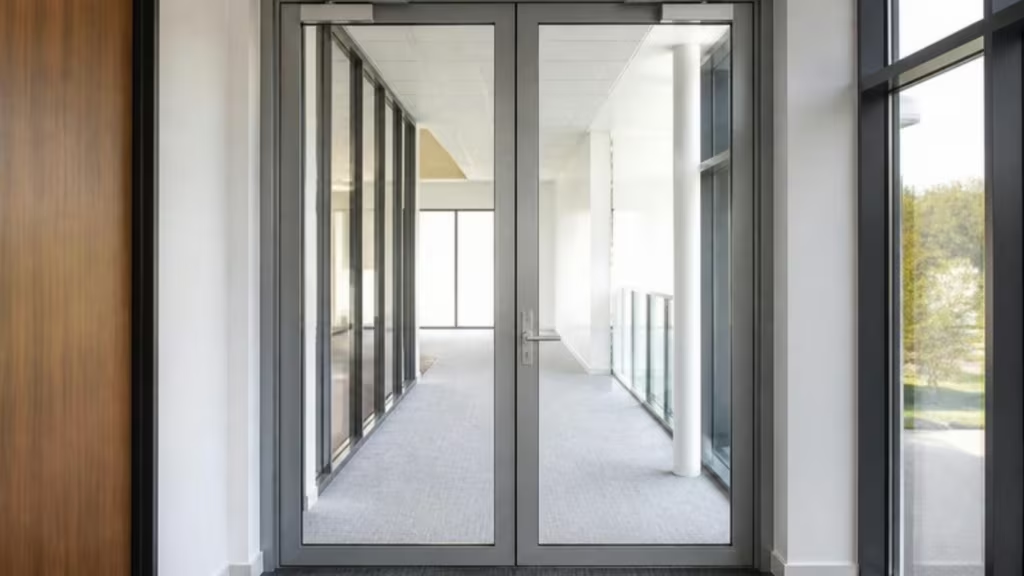
Typical uses for fire-resistant glass
- Fire doors and vision panels
- Glazed screens beside escape routes
- Stairwell and lobby partitions
- Corridor screens in schools and offices
- Apartment and hotel common areas
Fire-resistant glass FAQs
Is toughened glass fire-resistant?
No. Toughened glass is stronger but will break and fall out in a fire. Fire-resistant glass is a separate product tested for fire performance.
What does E30 or EI60 mean?
E means integrity (stops flames and smoke) and EI means integrity and insulation (also limits heat). The number is the time in minutes.
Can fire-resistant glass be cut on site?
No. It is made to exact sizes, so measurements must be confirmed before ordering.
Can I put fire-resistant glass in any frame?
No. The rating only applies in a frame and glazing system that has been tested with that glass.
Is wired glass still used for fire protection?
Wired glass can provide integrity in suitable frames, but modern clear fire-resistant glass is now more common because it looks better and can also be a safety glass.