
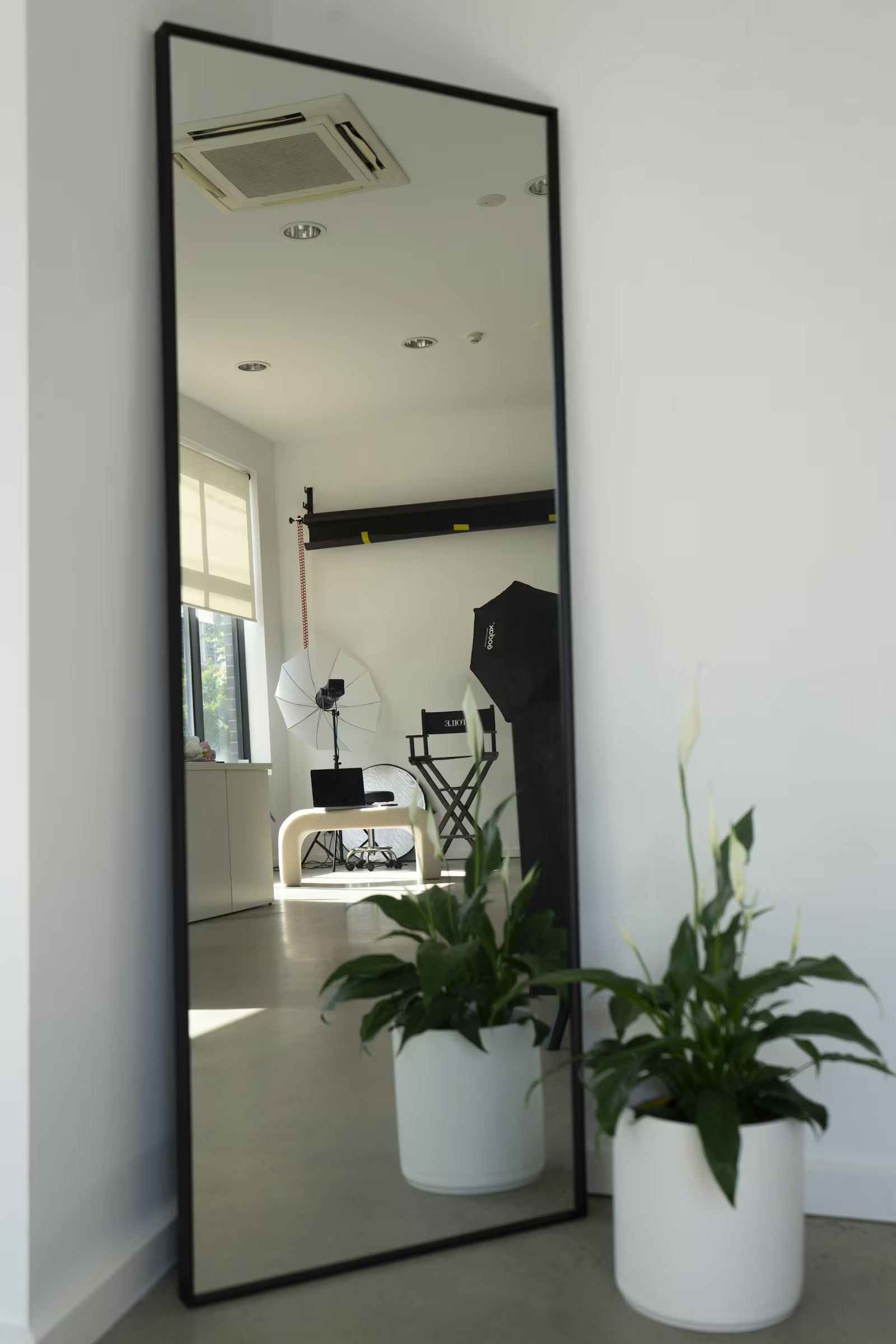
Silver mirror
Silver mirror is the classic, bright, true-colour mirror, cut to any size and shape with polished or bevelled edges for bathrooms, bedrooms, gyms and shopfitting.
What is silver mirror?
Silver mirror is clear float glass with a thin layer of silver applied to the back, protected by layers of paint. It gives a bright, sharp reflection with natural colours, and it is the standard mirror used in homes, bathrooms, hotels, gyms and shops.
Modern silver mirror is made copper-free and with low-lead paints, which improves resistance to the black edge corrosion seen on older mirrors. It is made to EN 1036, the European standard for silvered mirror glass.
Silver mirror can be cut to any size, shaped, drilled and edge-finished. For larger wall mirrors and anywhere a mirror might be knocked, we recommend adding safety backing film so the glass stays together if it breaks.
Silver mirror specification
- 3, 4 and 6 mm silver mirror
- Copper-free, low-lead backing to EN 1036
- Flat polished, pencil and bevelled edges
- Holes, cut-outs and template shapes
- Safety backing film to EN 12600
How we cut silver mirror to size
- Measure. Send the size, thickness and edge finish, plus the position of any holes or sockets.
- Cut and shape. The silver mirror is cut and shaped without damaging the backing.
- Finish edges. Edges are polished or bevelled to a bright, smooth finish.
- Back and deliver. Safety film is applied if required and the mirror is packed for delivery.
Choosing silver mirror
For most wall mirrors, 4 mm silver mirror is ideal. Choose 6 mm for very large mirrors, frameless mirrors fixed with clips or channels, and furniture where a stiffer, flatter reflection matters.
A polished edge suits a clean, modern look; a bevelled edge adds a classic frame-like border. In bathrooms, choose our moisture-resistant mirror, and for the truest colour, consider low-iron mirror.
Fix mirrors only with mirror-compatible neutral cure adhesives and clips. Some ordinary silicones attack the backing paint and cause dark spots over time.
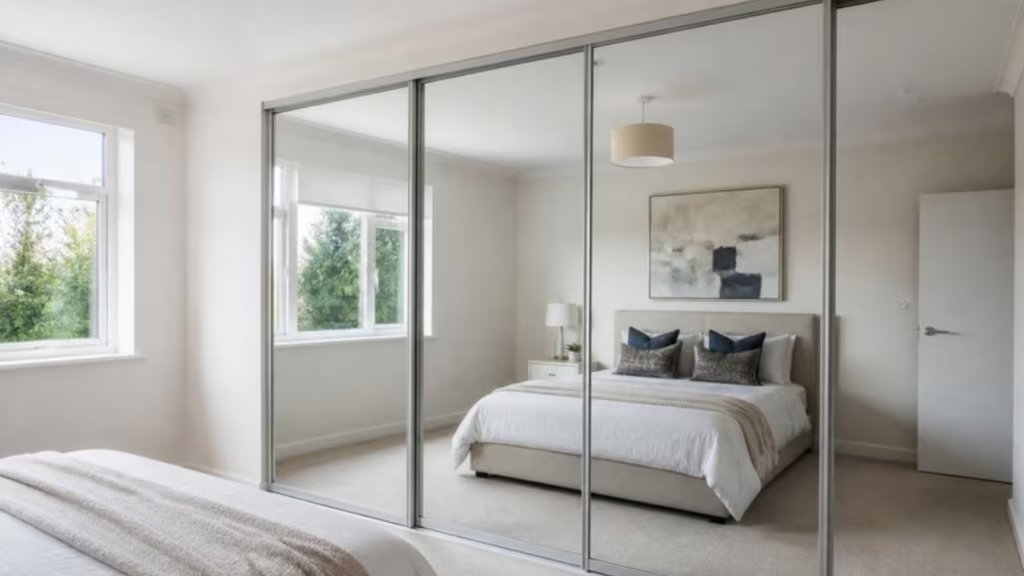
Typical uses for silver mirror
- Bathroom and bedroom wall mirrors
- Gym and dance studio mirrors
- Wardrobe doors and furniture
- Hotel, salon and shop interiors
- Framed mirrors and lift mirrors
Silver mirror FAQs
What thickness of silver mirror do I need?
4 mm silver mirror suits most wall mirrors. Choose 6 mm for very large or frameless mirrors.
Why do old mirrors get black edges?
Moisture and the wrong adhesives attack the silver at the edges. Copper-free mirror and mirror-safe adhesives greatly reduce the risk.
Can you cut a mirror to an unusual shape?
Yes. We cut circles, arches and template shapes and polish the edges.
Do I need safety backing on a mirror?
It is recommended for large mirrors, wardrobe doors, gyms and anywhere the mirror could be knocked.
Can you drill holes in a mirror?
Yes. Holes for screws and sockets are drilled before delivery, so we need their exact positions.