
Clear float glass
Clear float glass is the everyday glass behind almost every processed product. We supply it in full sheets or cut to your sizes, with polished edges, holes and shapes.
What is clear float glass?
Clear float glass is made by floating molten glass on a bath of molten tin, which gives it flat, parallel and distortion-free surfaces. It is the base material for almost every other glass we sell: it is toughened, laminated, painted, coated or made into double-glazed units.
Ordinary clear float glass contains a small amount of iron, which gives the edges a slight green tint that becomes more visible as the glass gets thicker. For most windows, shelves and picture frames this is barely noticeable. Where a colour-neutral look matters, low-iron glass is the better choice.
Untreated float glass is also called annealed glass. It can be cut, drilled and edged freely, but it breaks into sharp shards, so it is not a safety glass. In doors and other critical locations, use toughened or laminated glass instead. The float glass process is explained in more detail on Wikipedia.
Clear float glass specification
- Thicknesses 2, 3, 4, 5, 6, 8, 10, 12, 15 and 19 mm
- Full sheets or cut-to-size panes
- Manufactured to EN 572
- Flat, pencil and bevelled edges
- Holes, notches, radius corners and shapes
How we cut clear float glass to size
- Send your sizes. Width, height, thickness and edge finish are all we need for a quote. For shapes, a template or drawing works.
- Cut. The glass is scored and broken out on a cutting table for clean, accurate sizes.
- Edge and drill. Edges are arrissed for safe handling or polished for display, and holes are drilled where needed.
- Collect or deliver. Panes are packed and ready for collection, or delivered with your other glass.
Choosing the right thickness of clear float glass
As a guide, 2 mm suits picture frames, 4 mm suits small windows, cabinet doors and display covers, 6 mm suits shelves and table protectors, and 10 mm or more suits heavy-duty shelves and table tops. Larger spans need thicker glass, so tell us the size and how it will be supported.
If the glass will be in a door, a bathroom, a low-level window or anywhere it could be knocked, we will recommend a safety glass rather than plain clear float glass. Our glass processing services cover toughening and laminating if you need them.
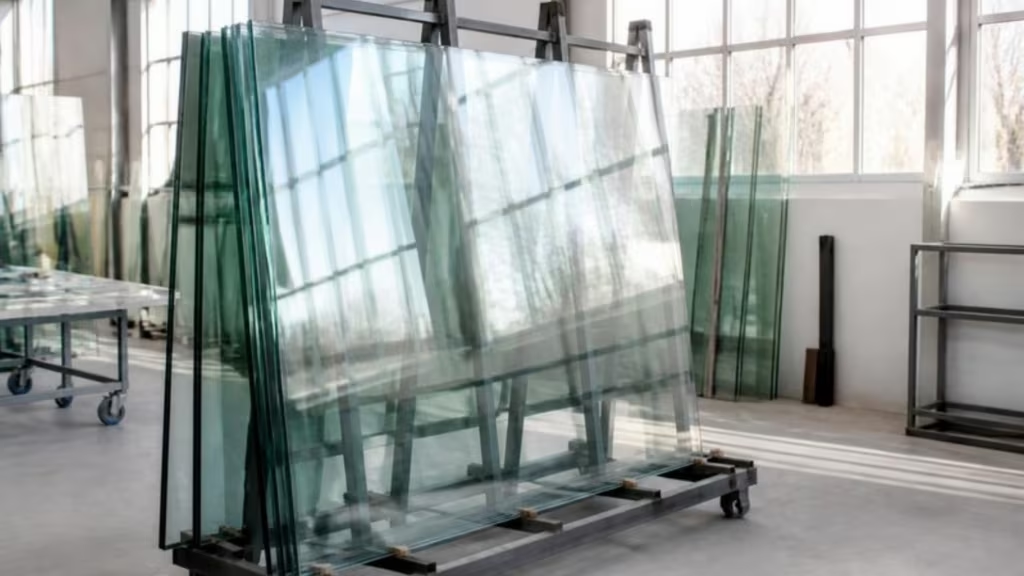
Typical uses for clear float glass
- Replacement window panes and secondary glazing
- Picture frames and display cabinets
- Shelves and table top protectors
- Greenhouses and garden frames
- Base glass for toughening, laminating and painting
Clear float glass FAQs
Is clear float glass safe for doors?
Not on its own. Doors and low-level glazing need safety glass, so we supply toughened or laminated glass for those locations.
Why does clear float glass look green at the edge?
The green tint comes from iron naturally present in the raw materials. It is most visible on thick edges. Low-iron glass removes most of this tint.
Can you cut clear float glass while I wait?
Simple cut sizes can often be prepared quickly. Message us your sizes first and we will confirm when they will be ready.
What edge finish should I choose?
An arrissed edge is fine when the edge is hidden in a frame. Choose a polished edge where the edge is on show, such as shelves and table tops.