
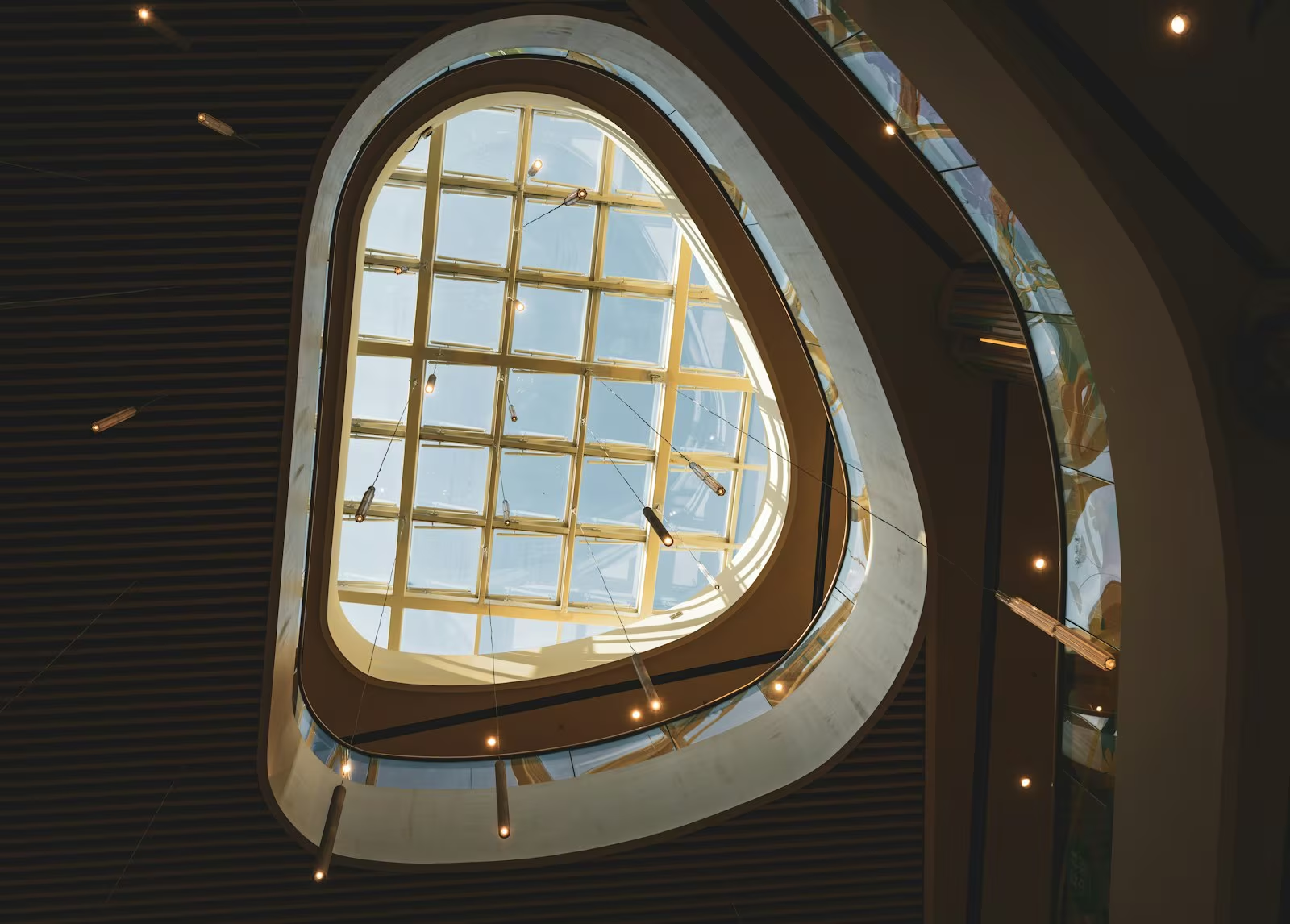
Dichroic glass
Dichroic glass changes colour as you move, reflecting one colour and transmitting another. It brings striking, shifting colour to feature screens, balustrades and art installations.
What is dichroic glass?
Dichroic glass has very thin layers of metal oxides applied to its surface or built into a laminated interlayer. These layers reflect some wavelengths of light and let others pass through, so the glass shows one colour in reflection and another in transmission.
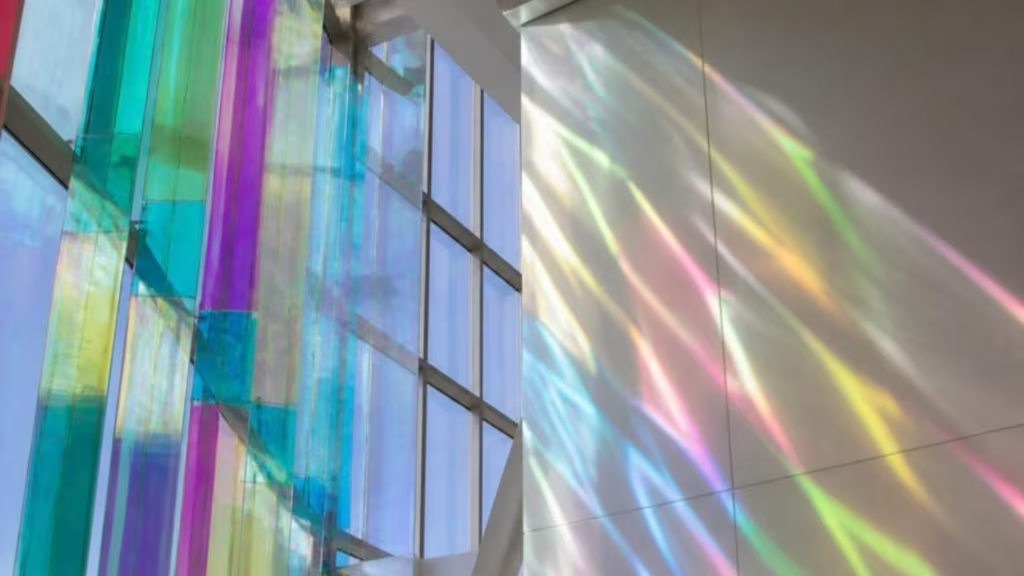
As you walk past dichroic glass, or as the sun moves through the day, the colours shift and change. It throws coloured light and shadows onto floors and walls, which is why it is popular for feature screens, staircases, reception areas and public art.
For architectural use, dichroic glass is usually made as a laminated glass with a dichroic film between two panes. This protects the coating and gives the panel the safety benefits of laminated glass. You can read more about dichroic glass and how it works.
Dichroic glass specification
- Laminated dichroic film between two panes
- Toughened or annealed plies
- Clear or low-iron base glass for the brightest colours
- Made to measure with polished edges
- Suitable for internal screens and balustrades
How we make dichroic glass panels
- Design. We discuss the colour effect, light direction and size of the dichroic glass you need.
- Process the glass. The panes are cut, edged, drilled and toughened if required.
- Laminate. The dichroic film is laminated between the panes under heat and pressure.
- Install. Panels are delivered ready for fixing in channels, clamps or frames.
Getting the best from dichroic glass
Dichroic glass works best where light can pass through it and land on a pale surface, such as a white wall or floor. Side light and direct sun make the colours most vivid, while dull north light gives a softer effect.
Using low-iron glass for the outer panes keeps the colours crisp and avoids a green cast. Because dichroic film is a premium material, it is often used for a single feature panel or a band within a larger glazed screen.
If the glass is in a balustrade or any safety-critical position, it must be toughened laminated glass sized for the loads, which we will confirm with your quote.
Typical uses for dichroic glass
- Feature walls and reception screens
- Glass balustrades and stair panels
- Office glass partitions
- Windows, rooflights and art installations
- Retail displays and signage
Dichroic glass FAQs
Why does dichroic glass change colour?
Thin optical coatings reflect some colours and transmit others. The colour you see depends on the viewing angle and the direction of the light.
Can dichroic glass be used outside?
Laminated dichroic glass can be used in windows and some external applications. Tell us where it will go so we can confirm the right build.
Is dichroic glass a safety glass?
When it is made as toughened or laminated glass, yes. The film itself does not make glass safe.
Can I have just part of a panel dichroic?
Yes. Bands, strips and shapes of dichroic film can be laminated into clear glass for a more subtle effect.
How do I clean dichroic glass?
Clean it like ordinary glass with a soft cloth and a non-abrasive cleaner. In laminated panels the coating is protected inside the glass.