
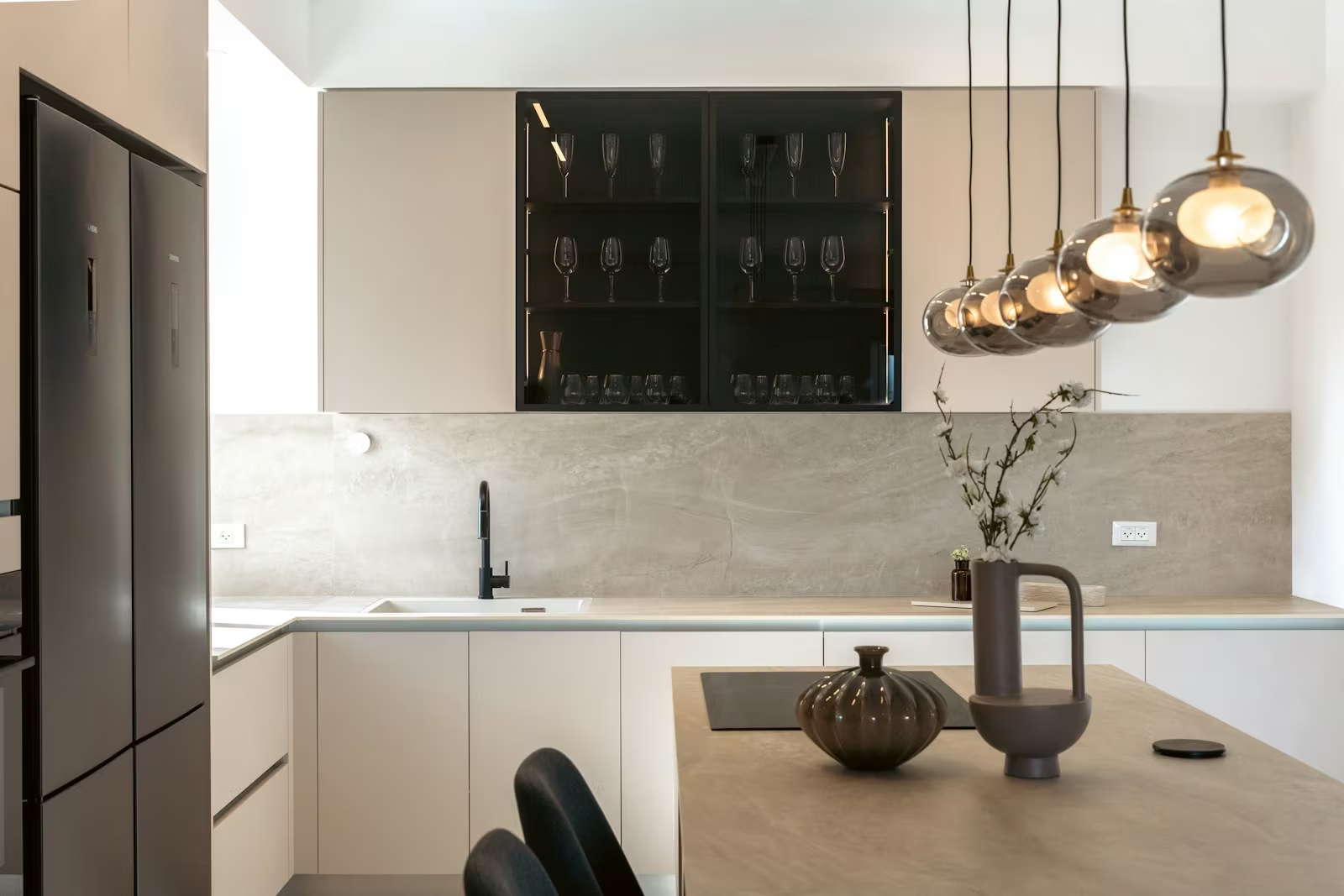
Furniture glass
Furniture glass for table tops, shelves, cabinet doors and display units, cut to any shape with polished or bevelled edges and toughened for everyday safety.
What is furniture glass?
Furniture glass is any glass made to be part of a piece of furniture: glass table tops, table protectors, shelves, cabinet and wardrobe doors, display cases and desk tops. What sets it apart is the finish. Edges are on show, so they are polished, bevelled or shaped, and corners are rounded for safety.
Most furniture glass today is toughened glass. It is far stronger than ordinary glass, copes better with hot dishes and knocks, and breaks into small blunt pieces if it ever fails. Thin protectors that lie on a timber table can be made from annealed float glass with polished edges.
You can choose clear, low-iron, tinted, frosted or back-painted glass, and any shape from a simple rectangle to a circle, oval or template-cut curve.
Furniture glass specification
- Thicknesses from 4 to 19 mm
- Flat polished, pencil polished and bevelled edges
- Circles, ovals and template shapes
- Holes for hinges, handles and cables
- Toughened, low-iron, tinted or frosted
How we make furniture glass to order
- Measure. Send the size and shape, or a paper template for curved and irregular pieces.
- Shape and cut. The glass is cut on a CNC table or by hand to your shape.
- Finish edges. Edges are polished or bevelled and corners radiused for a smooth, safe finish.
- Toughen and deliver. Glass that needs it is toughened, then wrapped to protect the polished edges.
Choosing the right furniture glass
For glass shelves, thickness depends on the span and the load. Light display shelves are often 6 mm, while bookshelves and longer spans need 8 to 10 mm toughened glass. For a freestanding dining table, 10 to 12 mm toughened glass is typical, and larger tables need more.
A table protector that lies on a wooden top is usually 4 to 6 mm with a flat polished edge and small clear bumpers underneath to stop it sliding. For coffee tables and desks, a pencil polished edge feels softer to the touch.
If you are unsure about thickness, tell us the size and how the glass is supported and we will recommend the right furniture glass for the job.
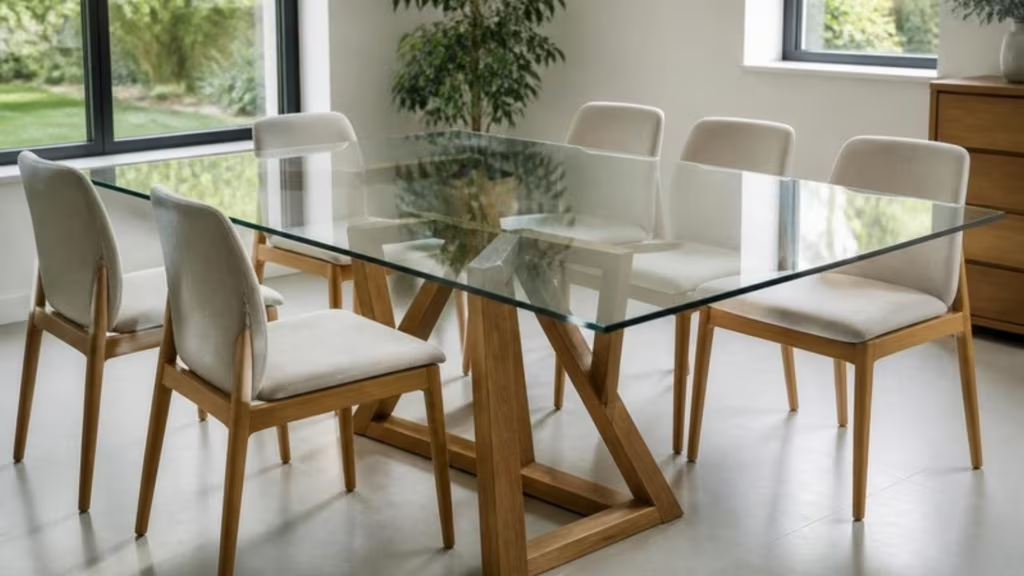
Typical uses for furniture glass
- Dining, coffee and desk table tops
- Table protectors for timber furniture
- Glass shelves and display cabinets
- Wardrobe and kitchen cabinet fronts
- Shop counters and display cases
Furniture glass FAQs
How thick should a glass table top be?
A freestanding glass table top is usually 10 to 12 mm toughened glass. A protector resting on a timber table can be 4 to 6 mm.
Can you cut a round glass table top?
Yes. We cut circles, ovals and custom shapes, and polish the edges smooth.
Do glass shelves need to be toughened?
Toughened glass shelves are stronger and safer, and are recommended for bathrooms, kitchens and anywhere shelves may be knocked.
What edge should I choose?
A flat polished edge gives a crisp, modern look. A pencil polished edge is rounded and softer to touch. A bevel adds a decorative border.
Can you drill holes for hinges?
Yes. Holes and notches for hinges, handles and cables are made before toughening, so we need their exact positions.