
Tinted glass
Tinted glass in bronze, grey, green and blue cuts glare and solar heat while adding a subtle colour. Cut to size, toughened or laminated for windows, partitions and furniture.
What is tinted glass?
Tinted glass, also called body-tinted glass, has metal oxides added to the molten glass so the colour runs right through the pane. Unlike a film, the colour cannot peel or scratch off, and the glass can be cut, edged, toughened and laminated like ordinary glass.
Because the tint absorbs part of the sunlight, tinted glass reduces glare and lowers the amount of solar heat entering a room. The darker and thicker the glass, the stronger the effect. Bronze and grey are the most popular for a warm or neutral look; green and blue suit contemporary facades and furniture.
Tinted glass is also widely used inside, for table tops and shelves, sauna doors, balustrades and partitions. For the same colours with a reflective finish, see our tinted mirrors.
Tinted glass specification
- Bronze, grey, green and blue
- Thicknesses typically 4 to 12 mm
- Toughened, laminated or annealed
- Polished and bevelled edges, holes and shapes
- Can be combined with solar control coatings
How we supply tinted glass
- Pick a colour. We can show samples so you can compare bronze, grey, green and blue tinted glass in daylight.
- Cut and edge. The glass is cut to your sizes and edges polished where they will be seen.
- Toughen or laminate. Safety processing is added for doors, furniture and balustrades.
- Deliver. Panels are packed and delivered with the rest of your order.
Choosing the right tinted glass
The colour of tinted glass deepens with thickness, so a 10 mm bronze pane looks noticeably darker than a 4 mm one. When matching existing glass, tell us the thickness as well as the colour so we can get as close as possible.
For reducing heat in sunny rooms and conservatories, tinted glass helps, but a dedicated solar control glass usually performs better while keeping rooms brighter. We can help you compare both.
Tinted glass in doors, low-level glazing and furniture should be toughened or laminated for safety, just like clear glass.
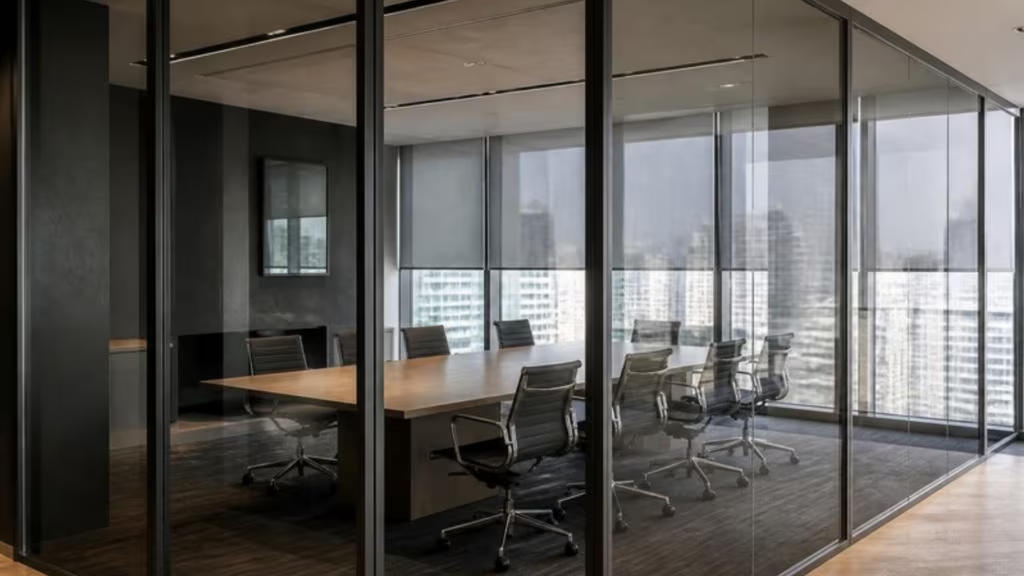
Typical uses for tinted glass
- Windows and facades that face the sun
- Glass table tops and shelves
- Sauna and steam room doors
- Balustrades and privacy screens
- Shopfitting and display units
Tinted glass FAQs
Does tinted glass give privacy?
Tinted glass makes it harder to see in during the day, but not at night when rooms are lit. For privacy at all times, choose frosted or patterned glass.
Can tinted glass be toughened?
Yes. Body-tinted glass is toughened and laminated in the same way as clear glass.
Will the colour fade over time?
No. The colour is part of the glass itself, so it does not fade or peel like a film.
Does tinted glass reduce heat?
Yes, it absorbs part of the solar energy. For the best heat control with more daylight, we recommend comparing it with solar control glass.
Can I match an existing tinted pane?
Usually, yes. Bring or photograph the old glass next to a white sheet of paper and tell us its thickness, and we will suggest the closest match.